What Is Polyester and Nylon Fabric? Types, Properties, Uses, and How to Choose the Right Fabric
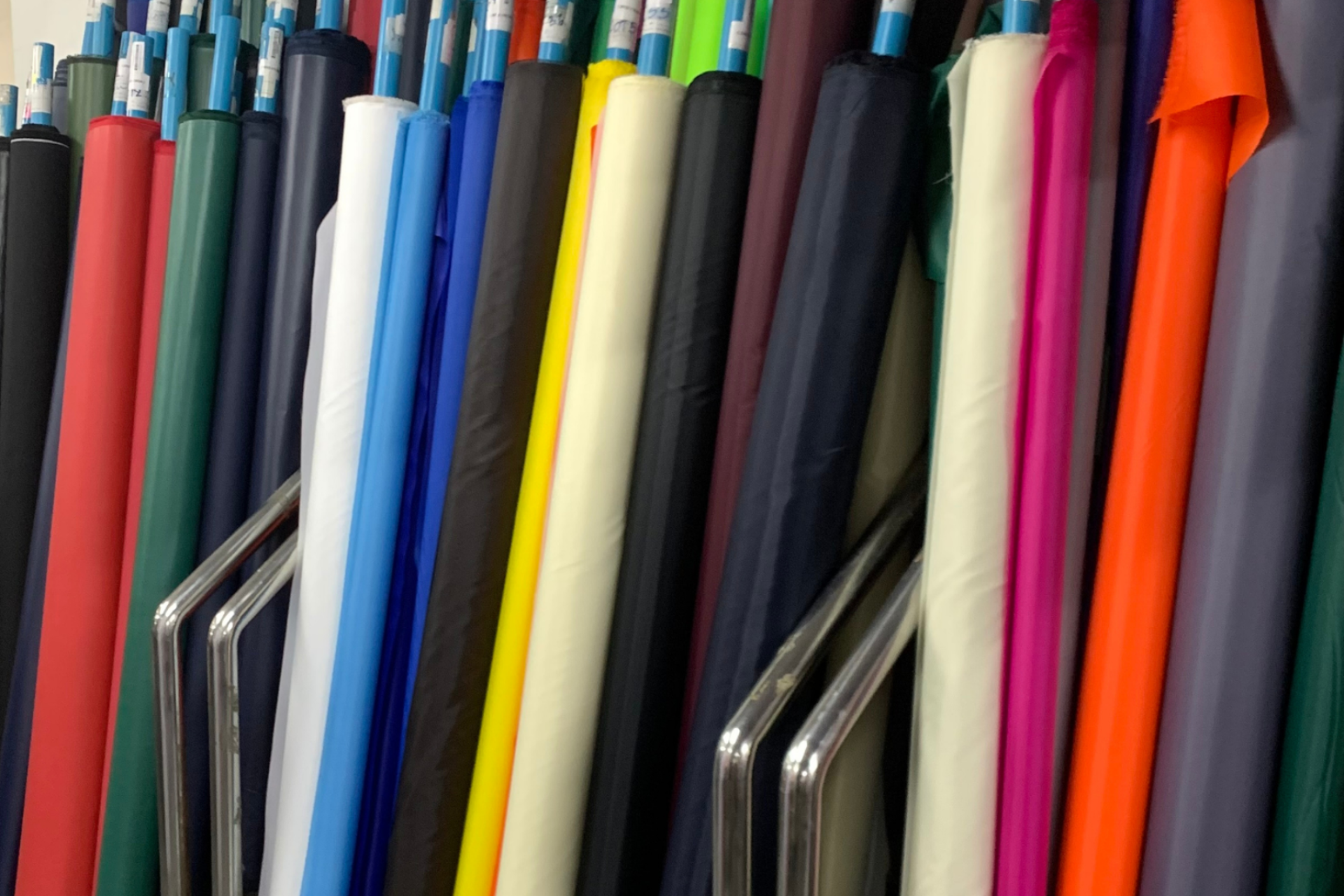
What Is Polyester and Nylon Fabric?
Polyester and nylon fabrics are synthetic fabrics available in a wide range of weights, from lightweight materials to thicker, more durable options. They are used in various applications, including umbrellas, windbreakers, foldable bags, backpacks, travel bags, and tool bags.
These fabrics can undergo additional treatments, such as PU coating, PVC coating, or a water-repellent finish, to improve water repellency, enhance durability, or meet specific application requirements.
Although different fabrics may look similar, their performance and properties can vary significantly. Buyers should check the product specifications and evaluate actual fabric samples before making a selection, especially for large-scale production.
What Are Polyester and Nylon Fabrics Made Of?
Most fabrics commonly associated with umbrella and outdoor applications are made from synthetic fibers, with polyester and nylon being two of the most widely used options.
Although both materials can be used in similar products, their inherent fiber characteristics differ, affecting the properties and performance of the finished fabric.
Understanding the differences between polyester and nylon is therefore an important first step in selecting the right fabric for a specific application.
What Is Polyester Fabric?
Polyester is a synthetic fiber widely used in various textile applications, including fabrics commonly used for umbrellas and outdoor products. One of its key advantages is its versatility. Polyester fabrics are available in a wide range of constructions and finishes, including lightweight and heavyweight options, matte and glossy surfaces, Ripstop weaves, and coated fabrics.
Polyester fabrics generally offer good shape retention and quick-drying properties. They are also well suited to sublimation printing because the dye bonds with the polyester fibers through heat. This makes polyester a popular choice for printed umbrellas, premium bags, event bags, and other custom-printed products.
However, different polyester fabric specifications may respond differently to heat and coating treatments. Testing a fabric sample before proceeding with large-scale production is therefore recommended.
What Is Nylon Fabric?
Nylon is a synthetic fiber known for its strength, toughness, and relatively lightweight construction. It is commonly used in backpacks, outdoor bags, windbreakers, tent flysheets, and camping equipment.
Nylon is also frequently woven using a Ripstop construction, which incorporates reinforcing yarns in a grid pattern to help limit the spread of tears. This makes Ripstop nylon suitable for products that are used frequently or exposed to outdoor conditions.
However, nylon is generally not the primary fiber used for conventional sublimation printing. For printing applications, buyers should select inks and printing methods specifically suited to nylon.
What Is the Difference Between Polyester and Nylon Fabric?
There is no single answer to whether polyester or nylon is better for every product. Each fiber has distinct advantages, and the right choice depends on the intended application.
Polyester is available in a wide range of specifications, offers good shape retention, and is generally better suited to sublimation printing than nylon. It is therefore a popular choice for products requiring printed graphics, as well as projects that prioritize cost control and large-scale production.
Nylon, on the other hand, is known for its toughness and ability to deliver strength in lightweight constructions. It is widely used in outdoor markets and products that require enhanced performance.
For example, if you are producing drawstring bags in large quantities for an event, polyester may be a suitable option due to its cost advantages and compatibility with sublimation printing.
However, if you are designing a lightweight daypack for travel, nylon may be worth considering because of its strength-to-weight advantages.
Conversely, for heavy-duty tool bags, lightweight polyester or nylon may not be sufficient. A stronger fabric construction with an appropriate coating may be necessary to meet the product's durability requirements.
The key to choosing the right fabric is to start with the application, not simply the fiber name.
How Many Types of Polyester and Nylon Fabric Are There?
There is no fixed number of types of polyester and nylon fabric because they can be classified according to several different factors.
By fiber type: Fabrics can be classified as polyester or nylon.
By weave construction: Common examples include Taffeta, Ripstop, and other weave structures.
By surface texture: Fabrics may include Pongee, Taslan, and other materials with different surface textures.
By coating or finish: Options may include PU coatings, PVC coatings, and other surface finishes.
By combined characteristics: A single fabric can incorporate several of these features at once.
For example, a fabric may be made from polyester, use a Ripstop weave, and feature a PU coating. Understanding these classifications helps buyers compare fabric specifications and select materials that meet their product requirements.
What Is PU-Coated Fabric?
PU-coated fabric is a fabric that has been coated with polyurethane (PU). The purpose of the coating varies depending on the product specification. It may help reduce water penetration, modify the fabric's stiffness or hand feel, or improve its suitability for specific applications.
PU coatings can be applied to either polyester or nylon fabrics. Therefore, the term “PU fabric” alone does not identify the fiber composition of the base fabric.
In many applications, PU-coated fabrics remain relatively lightweight and easy to fold, making them suitable for drawstring bags, foldable bags, umbrellas, jackets, tents, and outdoor equipment.
However, not all PU-coated fabrics are waterproof.
The level of water protection depends on factors such as the amount of coating applied, the coating process, the base fabric construction, and the performance standards of the specific product.
If a product requires a guaranteed level of waterproof performance, buyers should request relevant test results from the manufacturer or supplier rather than relying on the term “PU” alone.
What Is Ripstop Fabric?
Ripstop is a fabric construction commonly found in outdoor products and modern fashion applications.
It refers to a weaving technique that incorporates reinforcing yarns at regular intervals to help limit the spread of tears.
When viewed up close, Ripstop fabric typically features a small grid pattern, although the grid size can vary depending on the specification.
If a small tear or damaged area occurs, the reinforcing yarns help prevent the tear from spreading easily through the fabric.
However, Ripstop does not mean tear-proof. Sufficient force can still damage the fabric. Its construction is designed to help reduce the spread of tears, rather than prevent all tearing.
Ripstop fabric can be made from either nylon or polyester. For this reason, it is important to identify the material clearly, using terms such as Nylon Ripstop or Polyester Ripstop.
Buyers should also check the coating specification, because Ripstop describes the fabric's weave construction, not whether it is waterproof.
What Are the Applications of Ripstop Fabric?
Ripstop fabric is suitable for products that are more likely to experience pulling, snagging, or tearing than items used in everyday applications.
One of its most common uses is in outdoor equipment.
Trekking backpacks and daypacks may come into contact with branches or rough surfaces. Tents and flysheets may be exposed to tension from their frames and wind, while gear pouches may be folded, compressed, and packed repeatedly.
Ripstop construction can provide an added level of tear resistance for these types of products.
Beyond functional applications, Ripstop's distinctive grid pattern has also become a design element in fashion products.
Brands inspired by Gorpcore and outdoor fashion often use Ripstop fabric to create a technical, performance-oriented look, even when the products are not intended for extreme outdoor activities.
What Is Taffeta Fabric?
Taffeta refers to a type of woven fabric that typically has a smooth surface and can be made from either polyester or nylon.
Taffeta fabrics are available in a wide range of specifications, from very lightweight materials used for linings to coated fabrics suitable for bags, jackets, and outdoor products.
Therefore, the term “Taffeta” alone is not enough to determine a fabric's properties or performance.
Buyers should also check the fiber composition, fabric weight, denier, and coating specifications.
Some Taffeta fabrics are suitable for linings, while others may be appropriate for umbrellas or windbreaker jackets.
What Is Pongee Fabric?
Pongee fabrics commonly used in today's umbrella industry are often made from polyester and have a surface texture and hand feel that differ from those of standard polyester fabrics.
Pongee is frequently used for umbrellas with a more premium appearance, as well as rainwear, jackets, and other products where fabric texture and feel are important.
However, buyers should not assume that Pongee always refers to a specific fiber type.
The fiber composition should be checked to determine whether the fabric is made from polyester, nylon, or another material.
For umbrella manufacturers, selecting Pongee also involves evaluating weave density, surface finish, water repellency, and compatibility with logo-printing processes.
What Is Taslan Fabric?
Taslan is another fabric name commonly found in the outdoor apparel and functional fashion markets.
Taslan fabrics are often designed to give synthetic fibers a different texture and hand feel from conventional smooth-surface nylon or polyester fabrics.
Some specifications have a more cotton-like feel while retaining certain advantages of synthetic fibers.
Taslan is therefore used for jackets, outdoor trousers, fashion apparel, and products that require a distinctive surface texture.
For businesses developing outdoor apparel or Gorpcore-inspired fashion, Taslan is another fabric category worth comparing with Nylon Taffeta and Polyester fabrics.
Are Polyester and Nylon Fabrics Waterproof?
“Are polyester and nylon fabrics waterproof?” is one of the most frequently asked questions among fabric buyers.
The answer depends on the specific fabric specification.
Some fabrics provide effective water protection, while others are designed primarily to repel water. Some may have no special water-resistant properties at all.
A fabric's ability to protect against water depends on several factors, including weave density, surface finish, back coating, coating type, and the amount of coating applied.
Therefore, the term “polyester and nylon fabric” does not guarantee any particular level of water protection.
Even if a fabric is suitable for making umbrellas, that does not automatically mean it is suitable for tents exposed to heavy rain for several hours.
What Does Water-Repellent Mean?
Water repellency is a fabric property that helps prevent water from soaking into the material quickly. It often causes water to form droplets on the fabric surface rather than spreading across it.
When water droplets come into contact with the fabric, they may bead up and roll or run off more easily.
This property is suitable for products that may be exposed to light rain, water spray, or brief contact with water, such as windbreakers, fashion bags, travel bags, and umbrellas.
However, water-repellent does not mean that a fabric completely prevents water from passing through under all conditions.
During prolonged heavy rain or exposure to high water pressure, water may eventually penetrate the fabric.
What Does Waterproof Mean?
Waterproof refers to a fabric's ability to prevent water from penetrating it to a specified level.
For technical textile applications, a waterproof claim should ideally be supported by relevant test results.
One example is the hydrostatic pressure test, which measures how much water pressure a fabric can withstand before water passes through it.
Therefore, when selecting fabric for tents, rainwear, or equipment with specific waterproof requirements, buyers should not rely solely on dropping water onto the surface and observing the result.
Instead, they should review the test results for the exact fabric specification to verify whether it meets the required level of water protection.
Why Can Water Still Enter a Finished Product Even When the Fabric Is Waterproof?
Even when a fabric is waterproof, water may still enter the finished product through its seams.
During sewing, the needle creates small holes in the fabric, allowing water to pass through the stitched areas even when the fabric itself provides effective waterproof protection.
Products requiring a high level of waterproof performance, such as technical rainwear and tents, may need additional seam treatments, such as seam sealing or seam tape, to help prevent water from entering through stitched areas.
Therefore, evaluating a product's waterproof performance requires considering both the fabric itself and the construction and assembly methods used to make the finished product.
Are WR, PU, and Waterproof the Same?
No. WR, PU, and Waterproof refer to different properties or characteristics of a fabric.
- WR (Water Repellent): A surface property that helps repel water and encourages water droplets to bead up and roll off the fabric.
- PU (Polyurethane): A type of coating that can be applied to fabric to modify its properties, including reducing water penetration.
- Waterproof: A performance characteristic indicating that a material or product can resist water penetration to a specified level.
A single fabric may feature both a WR finish and a PU coating. However, this does not automatically mean it offers the same level of waterproof performance as every other fabric with these treatments.
If a specific level of water protection is required, buyers should review the relevant test results for the exact fabric specification.
What Is Denier (D)?
Denier, abbreviated as D, is a unit used to measure the linear mass density of yarn. It is a common specification when selecting fabrics for bags and outdoor applications.
In simple terms, when comparing yarns of the same type under similar conditions, a higher denier value generally indicates a heavier, thicker yarn.
Common fabric specifications include 70D, 210D, 300D, 420D, 600D, 900D, and 1680D.
However, denier alone does not determine all the properties of a fabric.
The weight of the finished fabric also depends on factors such as weave density, the size of the warp and weft yarns, and any coatings applied.
As a result, two fabrics labeled 600D may still have different finished weights and performance characteristics.
What Is 210D Fabric Suitable For?
210D fabric is suitable for lightweight to medium-duty applications, such as foldable bags, linings, storage pouches, and lightweight bags. However, the coating and fabric construction should also be considered, as different 210D specifications can have different performance characteristics.
What Is 420D Fabric Suitable For?
Compared with 210D fabric of a similar specification, 420D generally offers greater strength and a fuller body. It is suitable for backpacks, sports bags, small travel bags, and light-duty outdoor applications.
What Is 600D Fabric Suitable For?
600D is a popular specification for bags, including backpacks, school bags, premium promotional bags, travel bags, and cooler bags. It offers a practical balance of strength, cost, and manufacturability.
However, it is important to check whether the material is 600D PU or 600D PVC, as the coating can affect its properties and suitability for different applications.
What Is 1680D Fabric Suitable For?
1680D fabric is suitable for applications requiring high strength and abrasion resistance, such as travel bags, tool bags, and certain types of laptop bags. However, it is generally heavier, so it is often used selectively in areas such as bag bases and other high-stress points to avoid making the entire product unnecessarily heavy.
Does a Higher Denier Mean Better Quality?
Not necessarily. Denier indicates the linear mass density of the yarn; a higher number does not automatically mean the fabric is better for every application.
The right fabric should be selected according to the product's actual requirements.
What Is the Difference Between 210T and 210D?
210D and 210T are not the same unit. D, or denier, refers to the linear mass density of the yarn, while T is commonly used in certain fabric specifications to indicate thread count or weave density.
The figures should not be compared directly. Always check the full product specification before selecting a fabric.
Does GSM Matter?
In addition to denier, fabric weight measured in GSM, or grams per square meter, is another useful specification.
GSM helps buyers assess the actual weight of fabric per unit of area.
In some cases, denier alone is not enough. Two fabrics labeled 600D may have different GSM values because of differences in weave density and coating.
For factories calculating the weight of finished products, GSM can help improve costing accuracy.
What Are Polyester and Nylon Fabrics Used For?
Polyester and nylon fabrics have a wide range of applications.
Bags: From economical drawstring bags to backpacks and outdoor bags.
Apparel: Windbreakers, rainwear, jackets, and functional fashion products.
Outdoor products: Tents, flysheets, gear pouches, and protective covers.
Corporate promotional products: Tote bags, foldable bags, organizers, shoe bags, and travel bags.
These fabrics are also used for umbrellas, event products, flags, and printed promotional materials.
Because people searching for “umbrella fabric” may have very different requirements, identifying the intended product helps narrow down the most suitable specification.
How to Choose Fabric for Umbrellas
Fabric used for umbrellas must be suitable for opening, folding, and attachment to the umbrella frame.
If the fabric is too heavy, the umbrella may become cumbersome. If it is too stiff, it may be difficult to fold neatly.
Other factors to consider include water repellency, colorfastness, and logo-printing compatibility.
Polyester Pongee is commonly found in the premium umbrella market because it can offer a refined hand feel and appearance compared with some other polyester fabrics.
For large-volume promotional umbrellas, a more cost-effective polyester specification may be suitable.
The best choice depends on the umbrella's target market and intended price point.
Can Polyester and Nylon Fabrics Be Used for Bags?
Yes. These fabrics can be used for many types of bags, from drawstring bags and foldable bags to tote bags, backpacks, travel bags, and tool bags.
However, each bag type requires a different balance of thickness, strength, weight, and coating. One specification should not automatically be used for every bag application.
Fabric for Drawstring Bags
Drawstring bags for events and promotional products should generally be lightweight, cost-effective, and compatible with the intended printing method.
Lightweight PU-coated polyester is one option because it can be easy to fold and is available in a variety of colors.
For sublimation printing, white or light-colored polyester is generally the preferred starting point. Always test a sample before full production.
Fabric for Foldable Bags
Foldable bags require a balance between low weight and sufficient strength. Fabric that is too thick may be difficult to fold, while fabric that is too thin may not support the intended load.
Lightweight polyester or nylon can be considered for testing. Ripstop can also provide a more technical outdoor appearance and a construction designed to help limit the spread of tears.
Fabric for Tote Bags
The appropriate fabric depends on the tote bag's positioning.
For event giveaways, lightweight fabric may help control costs. For fashion-oriented products, Ripstop or Taslan can add texture. Shopping totes may require a stronger fabric or reinforced lining to support the intended load.
Fabric for Backpacks
Backpacks require consideration of both the outer fabric and other structural components, including webbing, zippers, buckles, lining, and foam.
420D and 600D are commonly used specifications. Lightweight backpacks may use nylon Ripstop, while products requiring greater durability may use 600D or incorporate 1680D fabric in high-stress areas.
Fabric for Travel Bags
Travel bags need to withstand abrasion, dragging, and impact. Polyester or nylon with a suitable construction should be selected according to the intended use.
PU or PVC coatings can help provide structure and reduce water penetration, depending on the specification. However, overall bag performance also depends on the lining, foam, and internal construction.
Fabric for Tool Bags
Tool bags need to withstand heavy loads and frequent abrasion. Stronger fabrics, such as 600D, 900D, or 1680D, may be suitable depending on the application.
The base and other high-stress areas may require additional reinforcement. Appropriate thread and seam construction are also important because a bag's strength does not depend on the fabric alone.
Fabric for Cooler Bags
Cooler bags are typically made from multiple layers. The outer fabric provides the exterior surface, while the interior may include foil, PEVA, and foam to help maintain temperature.
The outer fabric should be durable and easy to maintain. For some applications, 600D PVC may be an option.
However, insulation performance depends on the entire bag construction, not just the outer fabric.
Fabric for Outdoor Products
Choosing fabric for outdoor use requires consideration of weight, strength, tear resistance, water protection, and environmental exposure.
Ripstop can help limit the spread of tears. For products exposed to rain, check the WR finish, coating, and specified waterproof performance. For products exposed to sunlight for extended periods, UV resistance and colorfastness should also be considered.
Fabric for Tents
A single tent may require several fabric specifications because each section serves a different purpose.
The flysheet needs to provide suitable protection against rain and wind. The inner tent should take ventilation into account, while the floor needs sufficient strength and resistance to moisture from the ground.
Backpacking tents also prioritize low weight more than many conventional camping tents. Therefore, the same fabric specification may not be suitable for every part of a tent.
Fabric for Flysheets
A flysheet is the outer protective layer of a tent. The fabric should have an appropriate weight, good strength, and suitable water protection.
Coated nylon Ripstop and coated polyester Ripstop are common options. For commercial production, the required waterproof performance should be verified through the relevant specifications or test results.
Fabric for Jackets
Jacket fabrics require more than strength because they come into direct contact with the wearer.
Weight, hand feel, breathability, and wearing comfort should all be considered. Nylon, polyester, and Taslan are commonly used fabric groups.
Windbreakers generally prioritize low weight and wind resistance, while rain jackets require closer attention to waterproof performance and breathability.
Fabric for Windbreakers
Windbreakers generally use lightweight, packable fabrics that help reduce wind penetration, such as nylon Taffeta, polyester, or Taslan.
For protection against light rain, a fabric with a suitable water-repellent finish may be sufficient. For a garment intended to function as rainwear, a more comprehensive waterproof construction should be considered.
Fabric for Corporate Promotional Products
Polyester and nylon fabrics are suitable for a wide range of corporate promotional products because they can be used in different designs and price categories.
Examples include drawstring bags, foldable bags, tote bags, organizers, shoe bags, and promotional umbrellas.
To increase perceived value, brands can choose textured fabrics such as Ripstop or incorporate custom printing to create a distinctive brand identity.
The most suitable fabric does not necessarily have to be the thickest or most expensive. It should match the product's appearance, practical requirements, and project budget.
Can Polyester and Nylon Fabrics Be Printed?
Many polyester and nylon fabrics can be printed, but the printing method must be compatible with the fiber type and fabric finish.
Common methods include sublimation, heat transfer, and screen printing.
Each method has different advantages and limitations. Testing a sample is particularly important before placing a large production order.
What Is Sublimation Printing?
Sublimation is a printing process commonly used with polyester.
Under heat, the dye turns into a gas and bonds with the polyester fibers. This allows detailed images, multiple colors, and gradients to be reproduced effectively.
One advantage is that the color does not form a thick ink layer on the fabric surface, as can happen with some other printing methods.
Sublimation is commonly used for custom bags, event merchandise, flags, and promotional products.
Which Fabrics Are Suitable for Sublimation?
Polyester is generally the preferred starting point for sublimation printing.
White or light-colored fabric is usually recommended when the printed colors need to remain close to the original artwork.
Coated fabrics should be tested before production because heat may affect the coating.
Shrinkage and hand feel should also be checked after printing.
Do not test only whether the ink transfers successfully. Check whether the fabric retains its required properties after exposure to heat.
Can Nylon Be Sublimation Printed?
Nylon is generally not the primary material for standard sublimation printing.
Its chemical properties and response to heat differ from those of polyester. Using a sublimation process designed for polyester on nylon may result in poor color durability or other fabric-related issues.
If nylon needs to be printed, select a method designed for the material and test it before production.
Can Polyester and Nylon Fabrics Be Screen Printed?
Yes, in many cases.
Screen printing is suitable for logos and designs with a limited number of colors. However, ink adhesion on the fabric surface must be considered.
Fabrics with WR finishes, PU coatings, or PVC coatings may behave differently from untreated fabrics.
The printer should test ink adhesion and resistance to folding or scratching before full production.
Why Should You Test Printing Before Mass Production?
An order for promotional bags may involve thousands or even tens of thousands of units.
If problems occur after printing, such as color loss, color changes, fabric shrinkage, or coating damage, the resulting losses can be substantial.
Investing in a small sample run is often more cost-effective than discovering problems after mass production.
An approved sample should also be retained as a master reference for production quality control.
How Does Fabric Color Affect Production?
Color is another factor that businesses sometimes overlook.
An image displayed on a screen cannot accurately replace a physical fabric sample. Different screens display colors differently, and photography conditions and lighting can also affect how a color appears.
For products that require close corporate color matching, inspect a physical sample.
If greater color accuracy is required, a standard such as Pantone may be used when developing a new dye lot.
Will Different Fabric Lots Have Exactly the Same Color?
Color cannot be guaranteed to match 100% across every production lot.
Dyeing variations may result in shade differences between batches.
For large orders that require consistent color, use material from the same lot wherever possible.
Purchasing teams should also allow sufficient fabric for production and expected waste. If additional material must be ordered later, there may be a risk of shade variation.
Why Is Prototyping Important?
A fabric that looks suitable on a swatch may not perform well in a finished product.
For example, the fabric may be too stiff for a foldable bag or too soft to maintain the required shape.
A coating may make machine sewing more difficult, or the surface may scratch easily.
A prototype helps identify these issues before mass production begins.
How Should Beginners Choose Polyester and Nylon Fabrics?
If you are new to fabric selection, you do not need to start by memorizing every fabric name.
Begin with a product brief.
Tell your supplier what you want to make, the required dimensions, whether the product needs to carry a load, whether it will be used indoors or outdoors, the required level of water protection, whether printing is needed, and your approximate target price.
This information is much more useful than simply asking for “good umbrella fabric.”
The word “good” has no single universal standard.
How Should Factories Choose Fabric?
Factories should work with more detailed specifications.
In addition to the intended application, consider composition, yarn size, density, GSM, width, coating, finish, colorfastness, and relevant performance tests.
For large orders, lot control and an approval process are important.
Brands should establish clear approved standards to help prevent suppliers from changing specifications without notification.
How Should Brands Choose Fabric?
Brands should begin with the product's positioning.
Mass-market products: Prioritize cost control and stock availability.
Premium products: Pay closer attention to hand feel, texture, and finishing details.
Outdoor brands: Focus on performance and test results.
Fashion brands: Consider color, surface appearance, and trends.
Material strategy should align with brand strategy.
What Is the Difference Between Low-Cost and Premium Fabric?
Fabric prices are influenced by multiple factors.
Fiber type is one consideration, but yarn quality, density, weight, dyeing, finishing, and coating also affect cost.
Some colors may be more expensive to produce. Environmental standards and additional testing requirements can also increase costs.
Order quantity is another factor, as the unit cost of bulk purchases may differ from that of small orders.
Therefore, fabric quality should not be judged by price alone.
What Applications Are Suitable for Budget-Friendly Fabric?
Budget-friendly fabric does not necessarily mean poor-quality fabric.
If the specification meets the application's requirements, it can be an effective choice.
For example, an event giveaway bag intended for occasional use may not need outdoor-grade material.
Choosing a specification that exceeds the actual requirements can increase costs without delivering meaningful benefits to the user.
This is the principle of value engineering: selecting materials that meet the product's functional requirements efficiently.
When Is Higher-Quality Fabric Necessary?
Higher-quality materials deserve greater consideration for products with demanding performance requirements or a high risk of customer claims.
Examples include outdoor bags, rainwear, tents, tool bags, and products designed to carry heavy loads.
These products should be evaluated using relevant test results and production consistency checks.
The cost of product failures and after-sales claims may exceed the additional cost of using a more suitable fabric.
How to Care for Polyester and Nylon Fabrics
Care requirements depend on the fiber type and coating.
As a general rule, avoid harsh chemicals unless their effects on the fabric are known.
If a product becomes wet, allow it to dry before storage to help reduce moisture buildup and musty odors.
Some coated fabrics are not suitable for high temperatures. Machine washing or tumble drying may also affect the coating.
Always check the care instructions for the finished product.
How Long Does a Fabric Coating Last?
Fabric coatings do not last indefinitely.
Heat, moisture, UV exposure, repeated folding, and chemicals can contribute to coating deterioration.
Outdoor products stored in extremely hot vehicles or damp environments for long periods may deteriorate faster than products stored under suitable conditions.
Factories should consider the product's expected service life and operating environment when selecting materials.
Are Polyester and Nylon Fabrics Suitable for Thailand's Climate?
They are suitable for many applications in Thailand, provided the specification matches the intended conditions.
Thailand experiences rainfall, high humidity, and strong sunlight. Outdoor products therefore need to be evaluated for more than water protection alone.
UV resistance and colorfastness are also important. A fabric that resists water well but fades quickly may not be suitable for outdoor products exposed to sunlight every day.
Why Is UV Resistance Important?
UV radiation can affect fibers, dyes, and coatings.
For umbrellas, sunshades, tents, protective covers, and equipment that remains outdoors for extended periods, ask about UV resistance.
Waterproof performance does not automatically mean UV resistance. These are separate properties and should be evaluated independently.
What Is Colorfastness?
Colorfastness refers to a fabric's ability to retain its color when exposed to conditions such as light, washing, rubbing, or perspiration.
For outdoor fabrics, lightfastness is particularly important.
For fashion bags, abrasion-related color transfer should also be considered because dye may rub off onto clothing.
Brands and factories should specify testing requirements according to the product's intended use and potential risks.
What Is Abrasion Resistance?
Abrasion resistance is a fabric's ability to withstand rubbing and surface wear.
It is especially important for backpacks, travel bags, tool bags, and bag base panels.
A thicker fabric is not necessarily more abrasion-resistant. Yarn type and fabric construction also play important roles.
For heavy-duty applications, request relevant test results or conduct practical use tests.
What Is Tear Strength?
Tear strength refers to a fabric's ability to resist the propagation of a tear.
Ripstop construction is designed to help limit the spread of tears. However, tear strength also depends on fiber type, yarn size, and fabric density.
For technical products, evaluate test results rather than relying only on whether the fabric has a Ripstop pattern.
What Is Tensile Strength?
Tensile strength refers to a fabric's ability to withstand pulling forces before breaking.
It is important for products subjected to sustained tension, such as tents, bags, and protective covers.
However, finished-product performance also depends on seam strength. A fabric may withstand substantial force, but the product can still fail if a seam tears first.
Product design should therefore consider both fabric performance and construction.
How to Choose Fabric for Fashion Products
Fashion applications require more than functional performance.
Color, texture, drape, and hand feel all influence the final appearance.
Ripstop: Can create a technical look.
Taslan: Can provide a casual or outdoor-inspired texture.
Glossy nylon: Can create a sporty appearance.
Matte polyester: Can offer a clean, understated look that works across many applications.
Brands should choose fabrics that align with their design language.
Polyester and Nylon Fabrics in the Gorpcore Trend
Gorpcore is a fashion trend that brings elements of outdoor clothing and equipment into everyday wear.
Fabrics such as Ripstop, Taslan, nylon, and technical polyester are used to create this functional outdoor-inspired aesthetic.
Even when a product is not intended for actual mountain activities, fabric texture and detailing can help communicate a technical look.
This means these fabrics are no longer limited to umbrellas and bags; they are also finding applications in fashion.
Polyester and Nylon Fabrics for Promotional Products
Organizations often need promotional products that are practical and suitable for large production runs.
These fabrics can meet a range of requirements because they are available in different price categories and can support logo printing and corporate colors.
They can be developed into various products, including drawstring bags, foldable bags, tote bags, and umbrellas.
Choosing an appropriate fabric helps allocate the budget to the features customers notice, such as printing, zippers, and design, rather than paying for specifications that exceed the product's needs.
Polyester and Nylon Fabrics for Events
Event merchandise often needs to be produced quickly, with manageable costs and branding options.
Drawstring bags, tote bags, and foldable bags are popular choices.
Polyester is available in a range of specifications suitable for these applications.
For full-color images, sublimation may be an option. For logos with only a few colors, screen printing may be more cost-effective, depending on the order quantity and design.
Polyester and Nylon Fabrics for OEM Manufacturers
OEM manufacturers can benefit from maintaining a material library with several fabric grades, such as entry-level, standard, and premium options.
When customer inquiries arrive, the factory can quickly recommend materials that match the target price.
Keeping swatches and prototypes of different materials can reduce development time and help the factory offer upgrades from basic fabrics to materials with more distinctive textures or performance features.
What Should You Look for in a Fabric Supplier?
Choosing a supplier should involve more than comparing prices per yard.
Consider product consistency, stock availability, lot control, specification transparency, and the supplier's ability to resolve issues.
For factories with ongoing production, stock shortages can create costs that exceed the price difference between fabric suppliers.
A supplier with a broad range of specifications and the ability to provide samples promptly can help reduce product development time.
What Should You Ask Before Ordering Fabric?
Start by confirming the composition: polyester or nylon.
Then check the denier or fabric construction, width, weight, coating, and finish.
If the fabric will be printed, ask whether it is compatible with the intended printing method.
If water protection is required, ask whether relevant test results are available.
For outdoor applications, also consider UV resistance and colorfastness.
The clearer the requirements, the more accurately the supplier can recommend suitable materials.
Common Mistakes to Avoid When Choosing Fabric
Do not select fabric based on photos alone.
Do not choose the lowest price without comparing specifications.
Do not assume a higher denier is always better.
Do not assume PU coating automatically means waterproof performance in every application.
Do not begin mass production before testing a sample.
Do not change fabric lots without checking shade consistency when color matching is critical.
Conclusion: How to Choose the Right Fabric for Your Application
Polyester and nylon fabrics are available in many forms, including Ripstop and PU- or PVC-coated fabrics. Each has different properties and is suited to different applications. Fabric should not be selected based on thickness, price, or denier alone.
Start with the product and its actual requirements. Drawstring bags may prioritize low weight and print compatibility, foldable bags need to fold easily, and backpacks require appropriate strength. Outdoor products may need water protection, tear resistance, and UV resistance, while sublimation printing generally calls for a suitable polyester fabric.
Before mass production, check the specifications, request samples, conduct printing and sewing trials, and develop a prototype to confirm that the fabric meets the product's requirements.
Ultimately, the best fabric is not necessarily the thickest or most expensive. It is the material that matches the intended application, keeps costs under control, and delivers consistent results in production.
