What Is Gunnio Jute Fabric (Indian Jute Sacking)? Properties, Applications, and How to Choose the Right Material for Your Needs
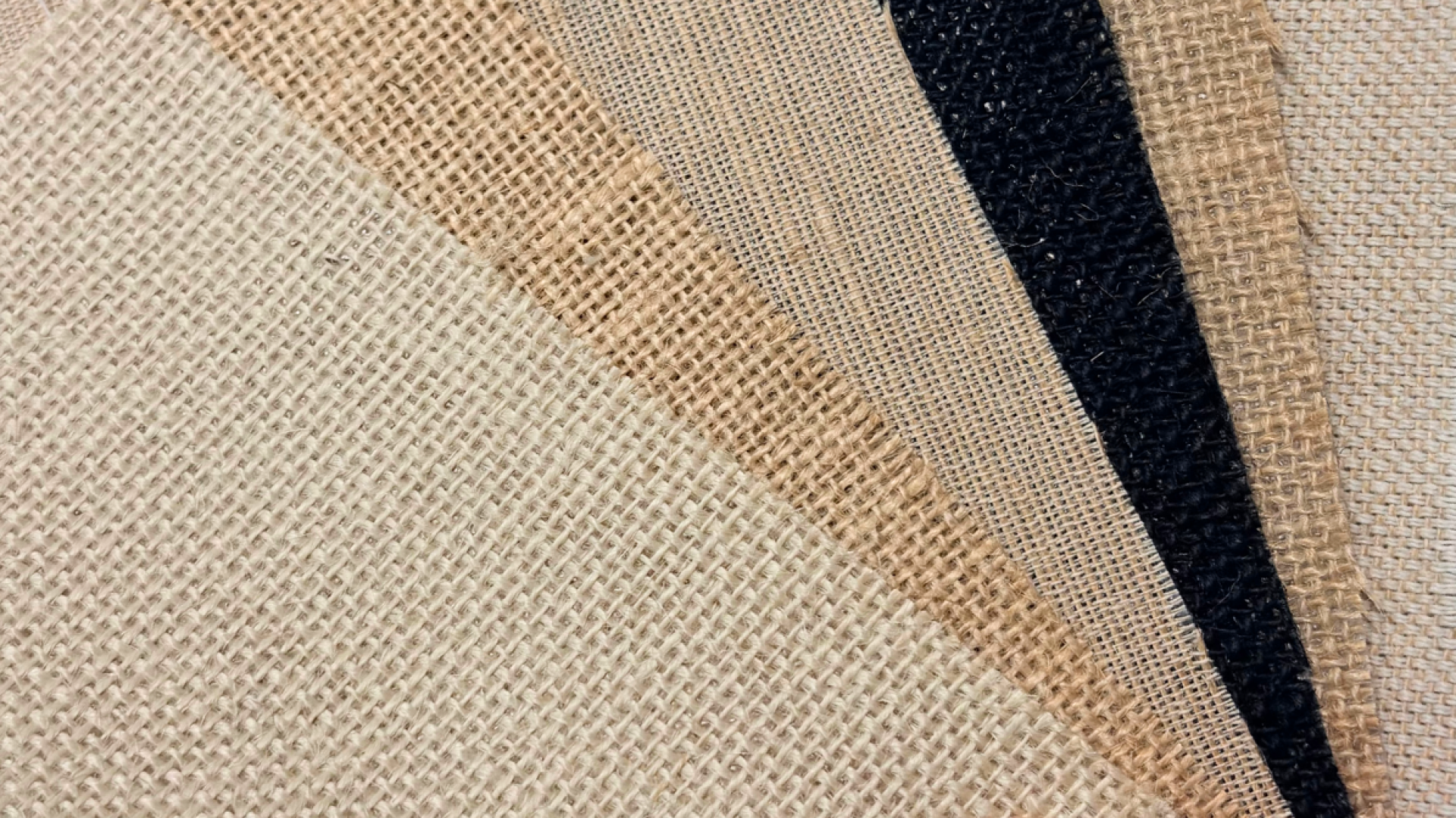
What Is Gunnio Jute Fabric?
Gunnio jute fabric is a term used in the Thai market to describe a type of burlap material. Its distinctive features include a clearly visible weave structure and pronounced fiber texture, giving it a natural appearance. It is commonly used for decorative items, bags, packaging, craft projects, and various lifestyle products.
Depending on the market, it may also be referred to as:
- Gunnio jute fabric
- Gunnio fabric
- Indian jute sacking
- Indian burlap
- Burlap fabric
- Jute fabric
- Hessian
- Burlap
What Is Jute?
Jute is a natural fiber derived from plants in the Corchorus genus. The two major species used for fiber production are Corchorus capsularis and Corchorus olitorius.
Jute is one of the most important natural fibers in industrial applications and is widely cultivated in regions such as India and Bangladesh.
Jute fibers are used to produce a wide variety of products, including:
- Sacks
- Ropes
- Woven fabrics
- Bags
- Rugs
- Home textiles
- Decorative items
- Handicrafts
- Geotextiles
- Industrial composite materials
Therefore, jute should not be viewed solely as a material for traditional product sacks.
Today, jute is increasingly being developed into value-added products and design-focused applications.
Why Is Jute Known as the “Golden Fiber”?
Jute is often nicknamed the “Golden Fiber” because of its distinctive natural color and subtle sheen, as well as its long-standing economic and industrial importance.
These characteristics give jute products a distinctive identity that sets them apart from cotton fabrics and conventional synthetic materials. When used in design applications, jute can help create a strong and recognizable character for a product.
Is Gunnio Jute Fabric Made from 100% Jute?
You should not assume that every type of Gunnio jute fabric available on the market is made from 100% jute.
Materials available in the market may include:
- Jute
- Jute blends
- Jute/cotton blends
- Blends of natural fibers
- Coated or laminated materials
- Other constructions depending on the manufacturer
Therefore, if you require a specific composition, such as 100% jute, request the technical specifications or confirmation from the supplier before placing an order.
This is particularly important when composition details are needed for:
- Product specifications
- Export requirements
- Brand claims
- Sustainability claims
- Tenders
- Certifications
- Product labeling
Do not rely on appearance alone to determine a material's composition.
What Are the Key Characteristics of Gunnio Jute Fabric?
One of the reasons this type of material remains popular is its distinctive texture, which differs from fabrics with smooth, uniform surfaces. Gunnio jute fabric features a clearly visible woven structure that gives it a natural, textured appearance.
Depending on the choice of color and design, it can create a variety of visual styles, including natural, rustic, craft-inspired, handmade, organic, vintage, country, and minimalist natural aesthetics.
These visual qualities allow Gunnio jute fabric to compete with other materials not only on functionality but also on its distinctive visual identity.
Key Features of Gunnio Jute Fabric
The actual properties depend on the composition, weave structure, thickness, and finishing of each product. However, materials in this category generally offer several distinctive advantages.
1. Distinctive Texture
The fibers and woven pattern are clearly visible, making this material suitable for products where the material itself is an important part of the design.
For example, a jute bag can have a distinctive character even without extensive printing, thanks to the natural texture of the material.
2. A Natural Material Aesthetic
When jute is used as a primary component, its fiber characteristics help create a recognizable natural look.
This makes it suitable for products and businesses associated with:
- Organic products
- Handmade goods
- Crafts
- Local products
- Agricultural products
- Cafés
- Hotels and resorts
- Weddings
- Gifts
- Lifestyle products
3. Versatile Processing and Applications
Jute is not limited to traditional product sacks. It can be used in a wide range of applications, including handicrafts, handloom products, packaging, decorative items, home textiles, industrial applications, and geotextiles.
This versatility creates opportunities to develop a variety of value-added products.
4. Compatible with Other Materials
When designing bags and packaging, Gunnio jute fabric does not have to be used on its own. It can be combined with other materials, such as:
- Cotton
- Canvas
- PU
- Synthetic leather
- Polyester
- Lining materials
- Rope
- Webbing
- Metal accessories
- Zippers
- Buttons
Combining materials allows designers to adjust the product's appearance and functionality to suit its intended purpose.
What Can Gunnio Jute Fabric Be Used For?
This is one of the most important questions for anyone considering this type of material.
Gunnio jute fabric can be used across a wide range of applications, particularly for products that benefit from a distinctive natural texture.
1. Bags
One of the most promising applications is bag manufacturing. Gunnio jute fabric can be developed into various bag styles, including:
- Tote Bags — A style that complements the texture of jute. The material can be used as the main body, with cotton webbing or other materials for the handles.
- Shopping Bags — Suitable for retailers and brands that want packaging customers can reuse as a bag.
- Gift Bags — Ideal for gift sets and corporate gifts, particularly for natural, organic, spa, food, coffee, and handmade products.
- Wine Bags — Jute's texture complements bottle packaging from a design perspective. Bags can be made for a single bottle or multiple bottles, depending on the design.
- Drawstring Bags — Suitable for gifts, handmade products, cosmetics, spa products, wedding favors, and gift sets.
- Beach Bags — Can be combined with cotton, canvas, or other materials to create a summer, resort, or natural aesthetic.
- Corporate Gift Bags — Companies can use this material to create distinctive promotional bags that stand apart from conventional polyester or spunbond bags.
2. Packaging
Gunnio jute fabric can serve as more than just a textile material. It can become an integral part of packaging design, especially for products that aim to communicate a natural, handcrafted, local, agricultural, organic, traditional, or sustainable design aesthetic.
Examples include:
- Coffee gift sets
- Tea sets
- Spa sets
- Soap packaging
- Candle packaging
- Handmade products
- OTOP products
- Souvenirs
- Agricultural products
- Corporate gifts
- With the right material selection and graphic design, packaging can help create a memorable brand experience.
3. Promotional and Corporate Gifts
The promotional products market is another promising application. Companies can use Gunnio jute fabric to create a variety of products, such as:
- Tote bags
- Shopping bags
- Gift bags
- Wine bags
- Drawstring bags
- Organizers
- Packaging
- Gift sets
Adding a company logo can give these promotional items a distinctive look compared with conventional giveaway bags.
4. Events
For events with themes such as natural, garden, rustic, farm, craft, local, or organic, Gunnio jute fabric can be incorporated into decorations and packaging.
Examples include:
- Giveaway bags
- Event bags
- Decorative signs
- Table decorations
- Booth decorations
- Gift packaging
- Product displays
5. Weddings
From a design perspective, Gunnio jute fabric complements rustic and outdoor wedding themes. It can be used to create:
- Table runners
- Chair decorations
- Gift bags
- Wedding favor bags
- Flower wraps
- Ring pillows
- Backdrops
- Banners
- Table decorations
- Cutlery holders
Combining jute with lace, dried flowers, jute rope, wood, and kraft paper can help establish a distinctive rustic wedding aesthetic.
6. Home Decoration
Jute has long been used in home textiles and furnishings.
Potential applications include:
- Cushion covers
- Table runners
- Placemats
- Certain types of curtains
- Wall decorations
- Storage products
- Basket covers
- Decorative panels
However, the weave structure and texture should be appropriate for the intended application. Coarse burlap may not be suitable for products that come into direct contact with the skin.
7. Cafés and Restaurants
Businesses seeking a natural or craft-inspired theme can incorporate Gunnio jute fabric into:
- Coffee bag decorations
- Menu covers
- Table decorations
- Product displays
- Gift bags
- Shopping bags
- Wall decorations
- Basket liners
- Packaging
Coffee-related businesses are particularly relevant because jute sacks are traditionally associated with coffee bean packaging.
8. DIY and Craft Projects
The distinctive texture of jute makes it suitable for various craft applications, including:
- Artificial flowers
- Bows
- Decorative signs
- Picture frames
- Gift boxes
- Scrapbooking
- Wall hangings
- Christmas decorations
- Wedding decorations
9. Planters and Gardening Products
Jute fabric can be used to decorate plant pots or plant packaging to create a natural look.
For example, wrapping jute around the outside of a plastic pot and decorating it with rope can transform an ordinary pot into a gift or decorative item.
However, if the material will be exposed to water or soil directly for extended periods, its suitability and construction should be evaluated carefully.
10. Displays and Visual Merchandising
Retailers and brands can use Gunnio jute fabric to create natural-looking product displays, including:
- Product backdrops
- Display tables
- Shelving displays
- Signs
- Product photography settings
- Exhibition booths
- Window displays
These applications are particularly relevant to food, coffee, organic products, crafts, and local-product brands.
Why Is Gunnio Jute Fabric Suitable for Packaging?
Packaging does more than simply contain a product. It communicates “what the product represents.” Different materials convey different impressions.
Plastic creates one impression.
Kraft paper creates another.
Canvas has its own character.
And jute brings a distinctive aesthetic of its own.
One of the key advantages of Gunnio jute fabric is that its texture can serve as a graphic element in its own right, reducing the need for extensive printed designs.
This makes it suitable for brands looking to create a raw, natural, craft-inspired, and authentic look.
Is Gunnio Jute Fabric Suitable for Eco-Friendly Brands?
Jute is a natural fiber that is biodegradable. However, before describing a finished product as “eco-friendly,” it is important to consider the entire material composition and manufacturing process, rather than looking only at the outer fabric.
Jute offers advantages as a natural, renewable, and biodegradable fiber.
“Jute is a natural and biodegradable fiber. However, the properties and environmental impact of the finished product depend on the other materials and processes used in its production.”
What Is the Difference Between Coated and Uncoated Gunnio Jute Fabric?
Uncoated Jute Fabric
Uncoated jute fabric retains more of its original woven appearance and natural texture, making it suitable for applications that require a natural look.
Examples include:
- Decoration
- Craft projects
- Weddings
- Table runners
- Gift wrapping
- Certain types of bags
- Coated Jute Fabric
Adding a coating to the back of the fabric can change its characteristics and functionality. Depending on the coating type and application method, it may help improve shape retention or reduce fraying in certain fabric constructions.
coated Jute Fabric
Coated jute fabric may be considered for applications such as:
- Shopping bags
- Tote bags
- Packaging
- Gift bags
Bags that require more structure and shape retention
However, it is important to check the coating type and technical specifications of each product before selecting a material for a specific application.
Is Gunnio Jute Fabric Waterproof?
You should not assume that standard Gunnio jute fabric is waterproof. Natural jute fibers can absorb moisture, and the woven structure contains gaps between the yarns.
If the material will be used in applications involving water exposure, check whether it has additional features such as:
- Coating
- Lamination
- Film
- Lining
Other protective structures
Even if the fabric has a coating, it should not be described as 100% waterproof without supporting test results.
Can Gunnio Jute Fabric Be Used Outdoors?
Gunnio jute fabric can be used for certain outdoor applications, but several factors must be considered:
Sunlight + Rain + Humidity + Duration of Use
The requirements for temporary event decorations differ significantly from those for materials that must remain outdoors for several months.
Therefore, the material should not be selected based solely on its natural appearance.
For long-term outdoor applications, check the technical specifications and test the actual material under the intended conditions before use.
Can Gunnio Jute Fabric Be Printed with a Logo?
Gunnio jute fabric can be considered for various logo-printing applications, particularly designs that do not require extremely fine details. However, the material's texture can affect print quality.
Because its surface is less smooth than polyester or film materials, designs with bold lines, clear shapes, and simple color schemes are often easier to adapt to the material's natural character.
However, always conduct a print test before proceeding with mass production to evaluate the results on the actual material.
What Types of Logos Work Best on Gunnio Jute Fabric?
From a design perspective, this type of material works well with logos that are:
- Easy to read
- High in contrast
- Free of excessively thin lines
- Not dependent on photographic-level detail
- Appropriately sized for the print area
A black logo on a natural-colored background is a common combination because it offers strong contrast and complements the material's character.
However, black is not the only option. Logo colors should be selected according to the brand's identity.
What Are the Best Applications for Natural, Bleached, and Black Jute Fabric?
Color can significantly change the character of the material.
Natural Jute
Creates a natural, rustic, organic, and craft-inspired look.
Suitable for:
- Coffee products
- Spa products
- Handmade goods
- Farm products
- Organic brands
- Weddings
- Resorts
- Gifts
Bleached Jute
Shifts the material's appearance from rustic toward a clean, minimalist, wedding-inspired, and modern natural aesthetic.
Suitable for:
- Weddings
- Cosmetics
- Gifts
- Home décor
- Minimalist brands
- Certain types of premium packaging
Black Jute
Creates a modern, premium, and contemporary impression.
Suitable for:
- Fashion products
- Corporate gifts
- Premium packaging
- Lifestyle products
- Modern cafés
These guidelines relate to design and visual identity rather than limitations on how the material can be used.
How to Choose Gunnio Jute Fabric for Bag Manufacturing
If you plan to use Gunnio jute fabric for bag production, do not choose the material based on color alone.
Consider the following factors before making a decision.
1. What Is the Bag Intended For?
Start by identifying the application, such as:
- Shopping bags
- Gift bags
- Event bags
- Wine bags
- Premium gift bags
- Fashion bags
Each application may require a different material structure and construction.
2. How Much Weight Must the Bag Carry?
Do not assume that a “strong burlap fabric” automatically guarantees a specific load-bearing capacity.
A bag's ability to carry weight depends on several factors, including:
- Fabric
- Bag dimensions
- Handles
- Stitching
- Stress points
- Lining
- Overall construction
Develop a prototype and conduct load testing to evaluate performance under the intended conditions.
3. Does the Bag Need to Hold Its Shape?
If the bag requires a defined shape, consider additional materials or construction features, such as:
- Coating
- Lining
- Interlining
- Foam
- Board
- Other reinforcing materials
4. Will the Bag Have a Printed Logo?
If printing is required, communicate this during material selection and conduct a print test before mass production.
5. What Color Do You Need?
Color has a significant impact on brand image. Compare actual fabric samples against your brand guidelines before confirming the final color.
How to Choose Gunnio Jute Fabric for Packaging
Packaging selection involves more than appearance. The intended use and product requirements must also be considered.
Does the packaging need to hold a lightweight or heavy product?
Different product weights may require different packaging structures and material specifications.
Will the material come into direct contact with food?
If direct food contact is required, verify that the material meets the applicable food contact requirements. Do not use standard jute fabric as a food contact material without supporting documentation.
Does the packaging need to resist moisture?
If a moisture barrier is required, an additional protective layer or another material may be necessary.
Will the packaging be used for shipping or display only?
Packaging designed for product display has different requirements from packaging intended for shipping and transportation. Choose the material and construction accordingly.
Advantages of Gunnio Jute Fabric
When selected for the right application, this type of material offers several advantages.
1. Creates a Natural Look Easily
Its distinctive character can create a natural aesthetic without requiring extensive graphic printing.
2. Distinctive Texture
Its texture differs from conventional fabrics, helping create product differentiation.
3. Versatile Applications
It can be used for bags, packaging, events, weddings, and decorative products.
4. Easy to Combine with Other Materials
It pairs well with cotton, canvas, wood, kraft paper, and rope.
5. Suitable for Customization
Shapes, colors, logos, and accessories can be customized to align with a brand's identity.
Limitations of Gunnio Jute Fabric to Consider
1. Uneven Texture
Its textured surface may not be suitable for printing designs that require a high level of detail.
2. Natural Fiber Variations
Natural fibers may vary in appearance and consistency, unlike synthetic materials that can offer more uniform surface characteristics.
3. Should Not Be Assumed to Be Waterproof
Additional material structures or treatments may be necessary when water resistance is required.
4. Some Applications Require Lining
This is particularly relevant for bags that need a neat, finished interior.
5. Must Be Matched to the Intended Application
Jute is not suitable for every product simply because it is a natural material.
What Should You Know Before Buying Gunnio Jute Fabric?
Before placing an order, consider the following:
- Intended application
- Required color
- Coated or uncoated material
- Required quantity
- Whether printing is needed
- Indoor or outdoor use
- Load-bearing requirements
- Whether lining is needed
Any special performance requirements
Providing this information helps suppliers recommend materials that better match your needs.
Why Should You Request Samples Before Bulk Ordering?
For large orders, especially in factory and B2B applications, requesting samples is strongly recommended. Website photographs cannot fully convey the material's:
- Actual texture
- Stiffness
- Softness
- Openness of the weave
- True color
- Shape retention
- Printing results
Behavior during sewing
A recommended process is:
Sample → Test → Prototype → Approve → Mass Production
Summary: What Is Gunnio Jute Fabric Best Used For?
Gunnio jute fabric, also known as Indian jute sacking, is distinguished by its texture and natural, rustic, and craft-inspired appearance. It can be developed into a much wider range of products than traditional sacks.
Promising applications include:
- Bags, tote bags, shopping bags, gift bags, and wine bags
- Packaging and corporate gifts
- Event products and wedding decorations
- Craft projects and home décor
- Product displays
For brands looking to communicate a natural, handcrafted, or local identity, this material can be an interesting option for product differentiation.
However, material selection should never be based on appearance alone.
Before making a decision, verify:
Fiber composition
Fabric construction
Whether the material is coated
Required load-bearing capacity
Printing requirements
Indoor or outdoor use
Any special performance requirements
Do not assume that all Gunnio jute fabrics are made from 100% jute, are waterproof, or are suitable for direct food contact without supporting specifications.
The same principle applies to sustainability-focused brands.
Jute is a natural fiber with renewable and biodegradable characteristics, but the environmental impact of a finished product must be assessed as a whole, including the fabric, coatings, lining, inks, accessories, manufacturing processes, and end-of-life management.
Ultimately, the best way to choose Gunnio jute fabric is not to ask, “Which material is the best?”
Instead, ask:
“What product are we manufacturing, and which material is best suited to our specific application?”
