What Is Calico Fabric? Properties, Types, Advantages, Disadvantages, and Applications
What Is Calico Fabric?
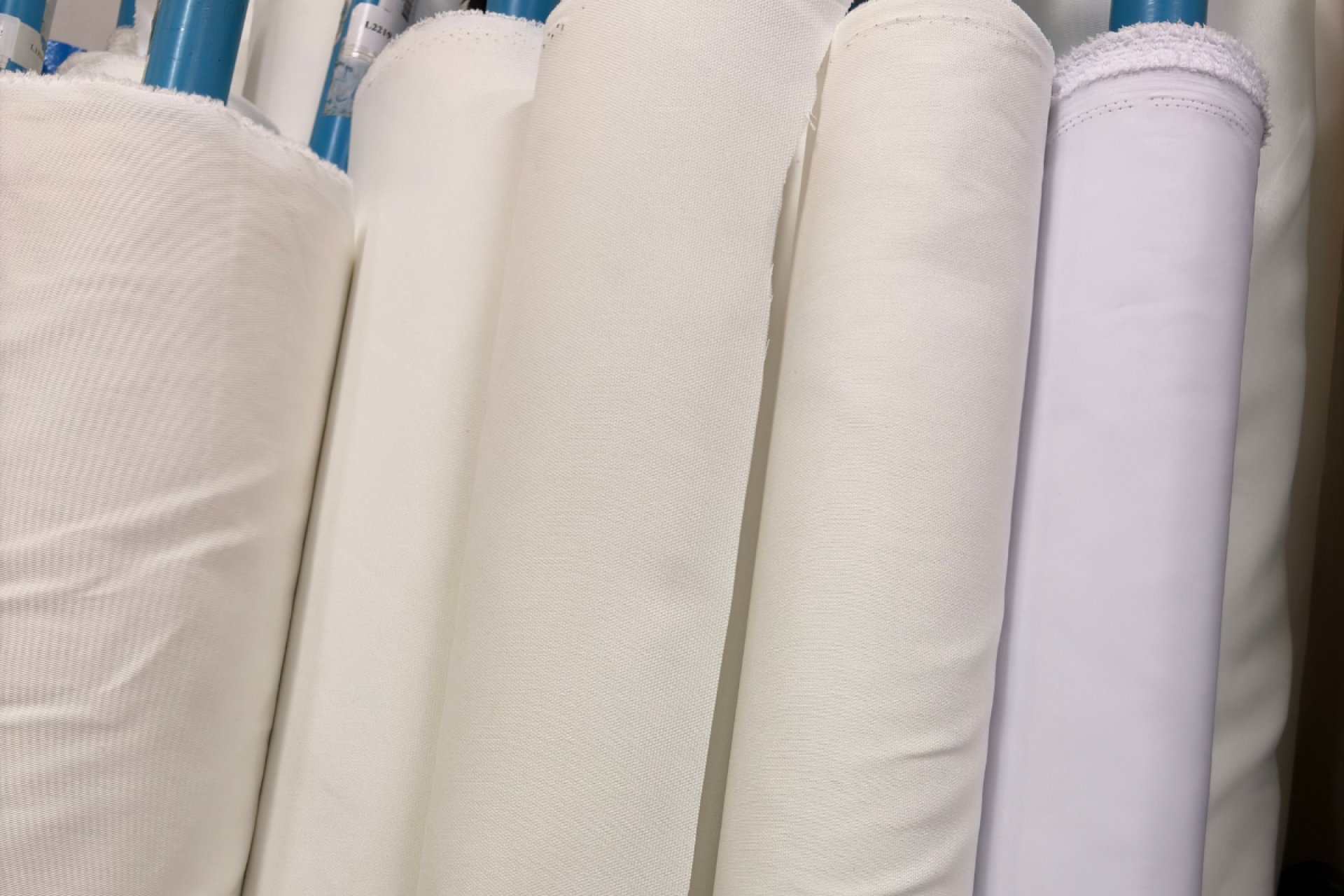
In the Thai market, the term Calico Fabric is commonly used to refer to fabrics in natural shades, such as off-white, cream, or ecru, that retain much of their original fiber characteristics or fabric structure.
However, in the textile industry, the term Greige Fabric refers to fabric in its unfinished state, before undergoing key finishing processes.
Examples of processes that greige fabric may not yet have undergone include:
- Bleaching – Removing natural coloration and impurities from the fabric
- Dyeing – Adding color to the fabric
- Printing – Applying patterns or designs to the fabric
- Coating – Applying a coating to the fabric surface
- Functional Finishing – Enhancing the fabric with specific functional properties
- Softening – Improving the softness and hand feel of the fabric
- Anti-shrink Finish – Reducing fabric shrinkage
- Water-repellent Finish – Improving the fabric’s ability to repel water
Greige fabric can therefore be considered a starting material for finished textiles.
Manufacturers can further process the fabric according to the requirements of the intended product.
For example:
Greige Fabric → Bleaching → Dyeing → Finishing → Cutting and Sewing
Or:
Greige Fabric → Surface Preparation → Printing → Cutting and Sewing
What Does Greige Fabric Mean?
Greige Fabric is a term used in the textile industry to describe fabric that has just been woven or knitted and has not yet undergone bleaching, dyeing, printing, or final finishing processes.
Other terms that may be used to describe this type of fabric include:
- Grey Fabric – Unfinished fabric
- Gray Fabric – Unfinished fabric
- Grey Goods – Fabric before finishing
- Greige Goods – Fabric before finishing
- Loom-state Fabric – Fabric in its state as it comes off the loom
- Unfinished Fabric – Fabric that has not yet undergone finishing processes
The term “Grey” does not necessarily mean that the fabric is gray in color.
Instead, it refers to the fabric’s state before it has undergone finishing processes to become a finished textile.
Therefore, many types of raw cotton fabric may appear in shades such as:
- Off-white
- Cream
- Light beige
- Natural color
Rather than gray.
What Is Calico Fabric Made Of?
This is one of the most important questions to consider.
The answer is that Calico Fabric can be made from various types of fibers and is not limited to cotton.
Examples include:
- Cotton – Cotton fiber
- Polyester – Polyester fiber
- Polyester-Cotton – A polyester and cotton blend
- Rayon – Rayon fiber
- Polyester-Rayon – A polyester and rayon blend
- Linen – Linen fiber
- Nylon – Nylon fiber
- Other Blended Fibers – Combinations of other fiber types
The fiber composition depends on the fabric construction and its intended manufacturing purpose.
However, in the Thai market, when customers refer to “Calico Fabric,” they often think of natural-colored cotton fabric or TC fabric (a polyester-cotton blend) first.
Therefore, it is important to check the fabric’s composition before purchasing to ensure that it meets the requirements of the intended application.
What Is Cotton Calico Fabric?
Cotton Calico Fabric refers to fabric made primarily or entirely from cotton, depending on its specifications, while retaining its natural color or characteristics.
If the fabric is labeled as 100% cotton, its specifications should confirm that it is made entirely from cotton.
Fabric color alone should not be used to determine fiber composition, as natural-colored fabric is not necessarily made from cotton.
Cotton Calico Fabric typically has the following characteristics:
- A natural texture and appearance
- Good moisture absorption
- Compatibility with various printing methods when properly prepared
- The ability to be dyed
- Potential shrinkage after washing
What Is TC Calico Fabric?
TC generally refers to a Polyester-Cotton Blend, a fabric made by combining polyester and cotton fibers in a specified ratio.
TC fabric can combine certain properties of both fiber types, such as:
- Some of the texture or appearance associated with cotton
- Improved shape retention in many specifications
- Reduced wrinkling in many fabric constructions
- Good strength
- Greater flexibility in cost management compared with 100% cotton
However, the actual properties depend on the polyester-to-cotton ratio.
The term TC alone does not specify the exact fiber composition.
For example:
- 65% Polyester / 35% Cotton
- 80% Polyester / 20% Cotton
- Other blend ratios
For technical or manufacturing purposes, always check the product specification to confirm the exact composition.
What Is the Difference Between Cotton Calico Fabric and TC Fabric?
The main difference lies in their composition.
Cotton Fabric
Cotton fabric is made from natural fibers and generally offers the following characteristics:
- Good moisture absorption
- A natural feel and appearance
- Compatibility with various dyeing and printing methods
- A tendency to wrinkle
- Potential shrinkage
TC Fabric (Polyester-Cotton Blend)
TC fabric combines polyester and cotton, which can help modify certain properties, such as:
- Reduced wrinkling in many specifications
- Improved dimensional stability
- Enhanced strength in certain fabric constructions
- Greater flexibility in production costs
However, the actual performance depends on the fiber blend ratio and fabric construction.
There is no universal answer as to whether cotton or TC is better. The right choice depends on the intended application.
What Colors Does Calico Fabric Come In?
Undyed or naturally colored calico fabrics typically come in shades such as:
- Natural – Natural fiber color
- Off-white – Soft white
- Cream – Cream
- Ecru – Natural cream shade
- Beige – Light beige
Color variations may occur due to several factors, including:
- Fiber type
- Raw material source
- Production lot
- Weaving process
- Yarn preparation process
If the natural color will remain visible in the finished product without dyeing, it is important to check the shade consistency of each production lot.
Why Does Calico Fabric Have Small Specks or Particles on Its Surface?
Cotton fabric that retains its natural characteristics may show certain surface variations, including:
- Specks – Small visible particles or fiber fragments
- Tiny bumps on the fabric surface
- Fiber remnants
- Yarn variations
- Uneven coloration compared with bleached fabric
These characteristics may occur naturally in the fabric and do not necessarily indicate defects.
However, manufacturers should establish clear acceptance standards before production to determine which variations are acceptable and which should be classified as defects.
What Is the Difference Between Calico Fabric and Bleached Fabric?
Calico Fabric, in the context of naturally colored fabric, retains its natural color or has not undergone bleaching according to the relevant product process.
Bleached fabric, on the other hand, has undergone a process to lighten or whiten its original color.
As a result, bleached fabric may offer:
- A whiter appearance
- A surface more suitable for certain dyeing or printing methods
- Greater consistency in background color
Therefore, if a printing process requires a white base to achieve the desired color appearance, bleached fabric may be more suitable than certain types of calico fabric.
What Is the Difference Between Calico Fabric and PFD Fabric?
PFD (Prepared for Dyeing) refers to fabric that has undergone preparation processes to make it suitable for dyeing.
Greige Fabric directly from the loom may still contain substances such as:
- Sizing Agents – Substances applied to strengthen yarn during weaving
- Wax – Waxy substances
- Oil – Oils remaining from processing
- Impurities – Unwanted substances on the fabric
These substances may make the fabric unsuitable for direct dyeing or printing without further preparation.
Therefore:
Greige Fabric is not the same as PFD Fabric.
This distinction is particularly important for dyeing mills and textile printing factories.
Why Can Fabric Straight from the Loom Feel Stiff?
In some weaving processes, warp yarns are treated with Sizing Agents to strengthen them and reduce yarn breakage during weaving.
After weaving, these substances may remain on the fabric, making it feel stiff or dry and potentially causing uneven water absorption.
Before dyeing or printing, the fabric may therefore need to undergo Desizing, a process that removes sizing agents from the fabric.
Should Calico Fabric Be Washed Before Use?
The answer depends on the intended application.
For fashion products or consumer goods that will be washed after purchase, manufacturers should consider:
- Pre-wash – Washing the fabric before production
- Shrinkage Test – Testing the fabric for shrinkage
However, for industrial dyeing or printing, the fabric may require specialized preparation processes beyond ordinary washing.
What Are the Properties of Calico Fabric?
1. Natural Appearance
Its cream or natural tones make Calico Fabric suitable for products with a variety of design styles, including:
- Minimal – Minimalist designs
- Natural – Nature-inspired styles
- Rustic – Simple, rustic aesthetics
- Craft – Craft and creative projects
- Handmade – Handmade products
2. Suitable for Further Processing
Calico Fabric can undergo various additional processes depending on the product specifications, including:
- Bleaching – Lightening or whitening the fabric
- Dyeing – Adding color to the fabric
- Printing – Applying patterns or designs
- Coating – Applying a coating to the fabric surface
- Lamination – Bonding the fabric with other materials
- Soft Finish – Treating the fabric to improve its softness
3. Available in Various Fabric Constructions
Calico Fabric comes in a range of fabric constructions, from lightweight fabrics suitable for:
- Clothing
- Linings
- Printing applications
To heavier fabrics, such as:
- Canvas – Durable fabric for bags and other products
- Bag Fabric – Fabric designed for bag manufacturing
- Multipurpose Fabric – Fabric used for a variety of practical applications
The most suitable option depends on the fabric's composition, weight, construction, and intended use.
What Can Calico Fabric Be Used For?
1. Fabric Bags
Calico Fabric can be used to make various types of bags, including:
- Tote Bags – Open-top carry bags
- Shopping Bags – Reusable shopping bags
- Gift Bags – Bags for gifts and presents
- Event Bags – Bags for events and functions
- Promotional Bags – Bags used for promotional campaigns
2. Tote Bags
Calico Fabric can be used for tote bags ranging from lightweight designs to bags that require greater structure and shape retention. The appropriate fabric weight and construction should be selected according to the intended use.
3. Premium Promotional Bags
Organizations can use Calico Fabric to produce a variety of premium bags, such as:
- Conference Bags – Bags for conferences and seminars
- Gift Bags – Bags for gifts and presents
- Shopping Bags – Bags for shopping
- Product Set Bags – Bags designed to hold product sets
Logos can be added through printing or embroidery to create customized products for corporate gifts, promotional campaigns, and special events.
4. Drawstring Bags
Calico Fabric is suitable for drawstring bags used for various purposes, including:
- Jewelry pouches
- Gift pouches
- Soap bags
- Hotel amenity bags
- Premium packaging
5. Screen Printing
Calico Fabric, particularly cotton varieties, can be compatible with various screen-printing methods.
However, the results depend on several factors, including:
- Fabric surface and texture
- Fiber composition
- Fabric preparation
- Printing ink
- Curing temperature
Testing the selected fabric and printing system before production can help ensure consistent results.
6. Logo Printing
The relatively light, natural background of Calico Fabric can work well with darker logo colors, such as:
- Black
- Blue
- Green
- Brown
- Red
If high color accuracy is required, a print proof should be prepared and approved before mass production.
7. Sublimation Printing
Fiber composition is an important consideration when selecting Calico Fabric for sublimation printing.
Sublimation printing is generally more suitable for polyester than for cotton. Therefore, TC fabric containing polyester may produce different printing results from 100% cotton fabric.
A print test should be conducted before proceeding with large production runs.
8. Clothing
Certain specifications of Calico Fabric may be suitable for making:
- Shirts – Shirts
- Blouses – Women's blouses
- Casual Wear – Casual clothing
- Workwear – Work clothing
- Costumes – Costumes and performance outfits
- Fashion Apparel – Fashion garments
The appropriate fabric depends on its weight, texture, fiber composition, and intended garment design.
9. Aprons
Calico Fabric can be used to make aprons for various businesses and activities, including:
- Cafés
- Bakeries
- Florists
- Craft shops
- Restaurants
- Workshops
Fabric selection should take into account the required durability, comfort, and ease of care.
10. Craft Projects
Calico Fabric is suitable for a variety of craft and creative applications, such as:
- Painting – Fabric painting
- Embroidery – Decorative stitching
- Sewing – Sewing projects
- Patchwork – Combining fabric pieces
- DIY – Do-it-yourself projects
- Decoration – Decorative items
11. Home Textiles
Depending on its weight and construction, Calico Fabric can also be used to make various home textile products, including:
- Curtains
- Pillowcases
- Covers
- Table Runners – Decorative table runners
- Home décor accessories
The best fabric specification depends on the intended function, appearance, and durability requirements of the finished product.
Is Calico Fabric Suitable for Eco-Friendly Brands?
Cotton Calico Fabric in natural shades can create an appearance associated with nature and natural materials.
However, a natural color does not automatically make a product sustainable.
Several factors should be considered, including:
- Raw material sourcing
- Manufacturing processes
- Dyeing processes
- Water consumption
- Chemical usage
- Reusability
- Product lifespan
- Packaging
- End-of-life product management
Therefore, terms such as Eco-friendly or Sustainable should not be used without supporting evidence.
Can Calico Fabric Be Printed?
Yes. Calico Fabric can be printed using various methods, depending on its specifications.
Common printing methods include:
- Screen Printing – Applying designs using a screen-printing process
- Pigment Printing – Printing with pigment-based inks
- Reactive Printing – Printing with reactive dyes
- Digital Textile Printing – Printing designs directly onto fabric using digital technology
However, Greige Fabric straight from the loom may require pretreatment processes before printing, such as:
- Desizing – Removing sizing agents
- Scouring – Removing oils, waxes, and other impurities
- Bleaching – Lightening or whitening the fabric
The required preparation depends on the fiber composition, fabric construction, and printing method.
Why Might Printed Colors Look Different on Calico Fabric Compared with White Fabric?
Calico Fabric may have a cream or natural-colored background, which can affect how printed ink colors appear.
For applications requiring high color accuracy, a strike-off or print proof should be prepared and reviewed before full-scale production.
What Is the Difference Between Calico Fabric and Canvas?
Calico Fabric generally refers to the fabric's natural appearance or its processing state, depending on the context.
Canvas, on the other hand, refers to a category of relatively dense and durable fabrics.
Therefore, canvas can be unfinished or greige fabric, but not all calico fabrics are canvas.
What Is the Difference Between Calico Fabric and Twill Fabric?
Twill refers to a weaving structure characterized by diagonal lines on the fabric surface.
The term “calico,” as used in this article, does not specify a particular weave structure. Therefore, calico fabric can also be woven in a twill construction.
What Fabric Weight Is Suitable for Making Calico Bags?
There is no single fabric weight that is suitable for every bag.
The selection should take into account:
- Bag shape and design
- Weight of the items the bag will carry
- Required shape retention
- Whether a lining will be used
- Seam strength and durability
For example, a flat tote bag may use a lighter fabric, while a box bag may require a heavier fabric or additional lining to maintain its shape.
Is Calico Fabric Waterproof?
Ordinary calico fabric should not be considered waterproof, especially when it is made from uncoated cotton.
If improved water resistance is required, additional treatments or materials may be considered, depending on the intended application:
- WR Finish (Water-Repellent Finish) – A treatment that helps water bead and run off the fabric surface
- PU Coating – Applying a polyurethane coating
- Acrylic Coating – Applying an acrylic coating
- Wax Treatment – Applying a wax-based finish
- Lamination – Bonding the fabric with another material layer
The actual level of water resistance depends on the treatment, fabric construction, and product specifications.
Does Calico Fabric Shrink After Washing?
Cotton Calico Fabric can shrink after washing. The degree of shrinkage depends on several factors, including:
- Yarn – Yarn characteristics
- Weave – Fabric construction
- Density – Weave density
- Finishing – Finishing processes
- Washing – Washing method
- Temperature – Water temperature
A shrinkage test should therefore be conducted before mass production, particularly for cotton products that will be washed.
Does Calico Fabric Need to Be Pre-Shrunk?
If the finished product will be washed, manufacturers should consider pre-washing or a pre-shrink process before production.
However, testing is necessary because these processes may affect:
- Surface texture
- Fabric hand feel
- Fabric width
- Natural color
The preparation method should be selected according to the final product requirements.
What Are the Advantages of Calico Fabric?
1. Natural Appearance
Suitable for minimalist, handmade, and craft-inspired products.
2. Versatile Finishing Options
Depending on the specifications, the fabric may be printed, dyed, embroidered, or coated.
3. Applications Across Multiple Industries
Suitable for a range of industries, from fashion to packaging.
4. Multiple Composition Options
Cotton, TC, and other fiber blends can be selected according to the intended application.
5. Suitable for Customized Products
Useful for made-to-order items such as corporate gifts and promotional products.
6. A Natural Background for Branding
The natural fabric color can help logos and other branding elements stand out, depending on the design and printing method.
What Are the Disadvantages of Calico Fabric?
1. Cotton May Shrink
Shrinkage testing is recommended before production.
2. Natural Colors May Vary Between Production Lots
Shade variations may occur, so color consistency should be checked.
3. Not Naturally Waterproof
Additional coating or finishing may be required for applications involving water exposure.
4. May Wrinkle
Cotton fabrics, in particular, may wrinkle during use and washing.
5. Greige Fabric May Not Be Ready for Immediate Printing
Pretreatment may be required before printing, depending on the fabric and printing process.
6. Natural Surface Variations May Be Visible
Small specks or fiber irregularities may occur. If a very smooth, white surface is required, bleached fabric may be a more suitable option.
How to Select Calico Fabric for Industrial Manufacturing
Step 1: Define the Intended Application
Determine what product the fabric will be used to make.
Step 2: Select the Composition
Choose cotton, TC, or another fiber type according to the product requirements.
Step 3: Select the Construction
Consider the appropriate fabric structure, such as:
- Plain Weave
- Twill
- Canvas
Step 4: Check the Fabric Weight
Review the GSM (grams per square meter) or the weight specification provided by the supplier.
Step 5: Check the Fabric Width
Width directly affects fabric yield and the number of pieces that can be cut from a given quantity of fabric.
Step 6: Select the Finishing Process
Determine whether the application requires greige, bleached, dyed, or printed fabric.
Step 7: Check Shrinkage
Conduct shrinkage testing, particularly for cotton fabrics.
Step 8: Test Printing and Sewing
Evaluate the fabric using the actual production processes.
Step 9: Develop a Prototype
Produce a physical sample of the finished product.
Step 10: Approve the Sample
Confirm the sample meets the required specifications before proceeding to mass production.
Why Is Fabric Width Important?
Fabric width directly affects fabric consumption and yield, which refers to the number of usable pieces that can be cut from the fabric.
Therefore, buyers should not compare fabrics based on price per yard alone. They should also calculate the fabric cost per finished product to determine the most cost-effective option.
10 Common Mistakes When Selecting Calico Fabric
Assuming all calico fabric is 100% cotton. Fiber composition must be verified.
Assuming all calico fabrics are the same. Fabric construction and composition can vary significantly.
Ignoring shrinkage. This can create problems, especially with cotton products.
Overlooking fabric width. This may increase the cost per finished item.
Assuming every natural-colored lot has the same shade. Natural color variations can occur.
Printing without testing. The fabric may still contain substances from manufacturing.
Assuming calico fabric is the same as canvas. These terms describe different aspects of fabric.
Assuming cotton is waterproof. Ordinary cotton is not inherently waterproof.
Labeling a product as eco-friendly simply because it uses natural-colored fabric. Environmental claims require supporting evidence.
Starting mass production without a prototype. This increases the risk of manufacturing problems.
Conclusion
Calico Fabric, as the term is used in this article, covers a range of textile materials that can be used for various applications, including:
- Fabric bags
- Tote bags
- Premium promotional bags
- Drawstring bags
- Screen printing
- Printed products
- Embroidery
- Clothing
- Aprons
- Hats
- Footwear
- Craft projects
- Event merchandise
- Packaging
- Home textiles
However, one important point to understand is that calico fabric is not necessarily 100% cotton.
In the textile industry, Greige Fabric can be made from various fiber types. In the Thai market, fabrics commonly referred to as calico may include both cotton and TC (polyester-cotton blend) fabrics.
Before purchasing, always check the actual product specifications, including:
- Composition – Fiber content
- Weight – Fabric weight
- Width – Fabric width
- Construction – Weave or fabric structure
- Finishing – Finishing processes applied to the fabric
Another important distinction is that calico fabric is not the same as canvas. Canvas refers to a type of fabric construction, while “calico,” as used here, -relates to the fabric's natural appearance or processing state.
For manufacturers, brands, and business owners, the following considerations can help guide fabric selection:
For bags, select a fabric weight and strength appropriate for the intended load.
For printing, verify the composition and pretreatment requirements.
For cotton products that will be washed, conduct a shrinkage test.
For outdoor applications, verify the required level of water resistance.
For premium products, consider the fabric, logo, sewing quality, packaging, and overall appearance together.
For industrial manufacturing, a practical selection process is:
Define the application → Select the fiber composition → Choose the fabric construction → Check weight and width → Determine the finishing process → Request a fabric sample → Test printing and sewing → Conduct washing tests → Develop a prototype → Approve the sample → Proceed to mass production.
Rather than asking, “Which calico fabric is the best?” a more useful question is:
“Which calico fabric specification best suits our product, manufacturing process, and budget?”
The best fabric is not necessarily the thickest, the one with the highest cotton content, or the cheapest option.
It is the fabric that provides the right balance of appearance, strength, printability, manufacturing requirements, product lifespan, and overall cost for the finished product.
