What Is T-COT Velvet Fabric? Properties, Advantages, Disadvantages, and Applications
What Is T-COT Velvet Fabric?
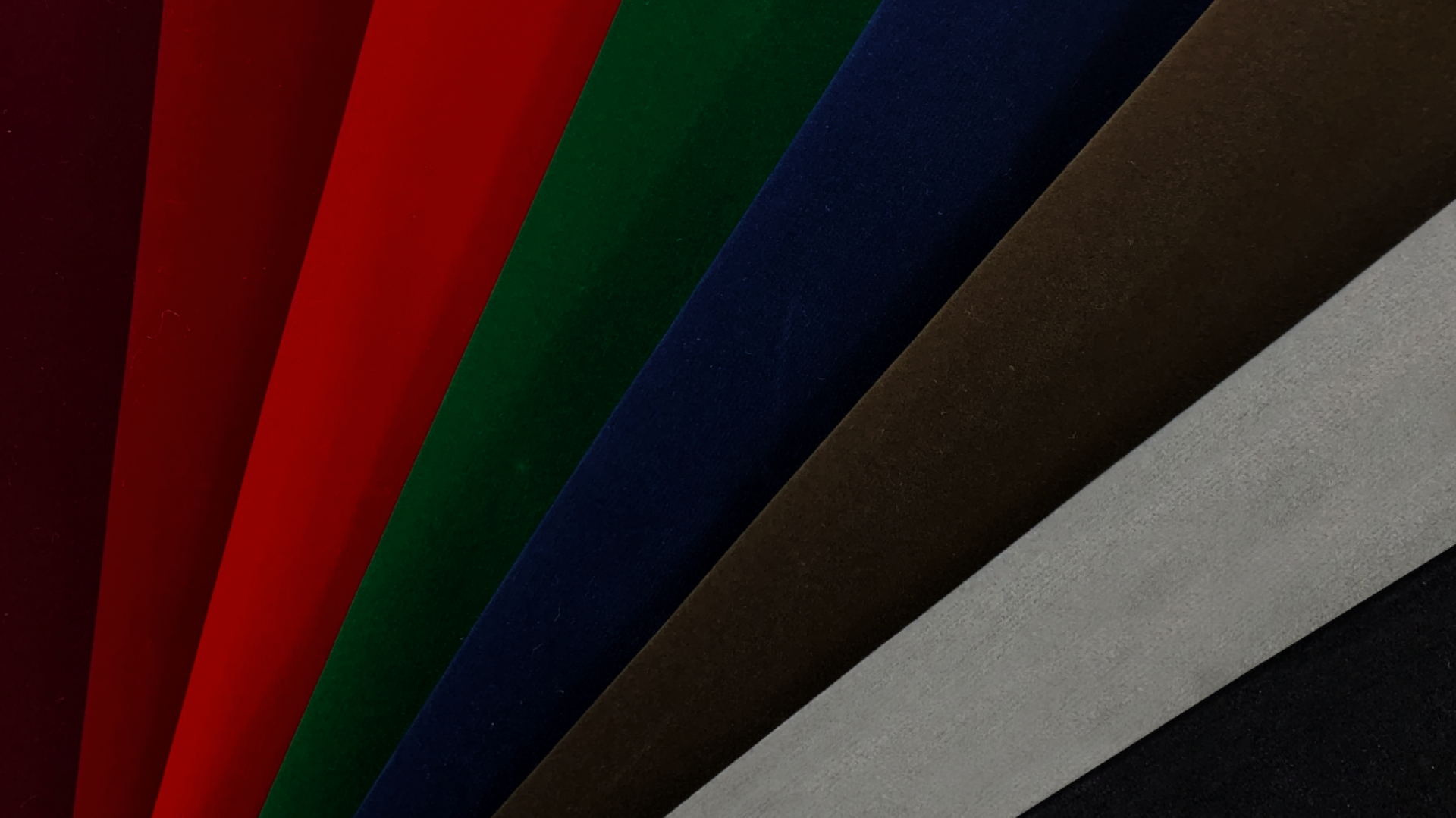
T-COT Velvet is a type of synthetic velvet fabric featuring a soft pile on one side, providing a smooth, soft feel and a subtle sheen when exposed to light.
WLC's T-COT Velvet Fabric specifications:
- Composition: 100% Polyester
- Width: 54 inches
- Weight: Approximately 160–170 GSM
- Roll Length: Approximately 23 or 25 yards per roll
- Surface: Soft pile on one side
- Texture: Smooth and soft to the touch
- Appearance: Subtle surface sheen
These characteristics make it suitable for applications requiring a soft touch, decorative surface, and premium appearance.
Examples include:
- Jewelry Boxes
- Jewelry Pouches
- Bag Linings
- Gift Bags
- Packaging
- Souvenirs and Gift Items
- Decorative Labels
- Display Materials
- Certain Furniture Upholstery Applications
What Is Velvet Fabric?
In general, velvet is a fabric characterized by a pile surface, with soft fibers raised above the base fabric.
Its distinctive features include:
- A soft surface
- Short pile
- A dimensional texture
- Light reflection that varies with the direction of the pile
- A luxurious appearance
Modern velvet can be manufactured from various fiber types, including:
- Polyester
- Cotton
- Viscose
- Silk
- Blended Fibers
Therefore, the term “velvet” describes the fabric's structure and surface texture, rather than a specific type of fiber.
Why Does Velvet Fabric Look Shiny and Dimensional?
The main reason is the pile, or the raised fibers on the fabric's surface.
When light hits velvet, the fibers reflect light differently depending on:
- Direction of the pile
- Viewing angle
- Pile height
- Pile density
- Fabric color
As a result, the same color may appear darker or lighter when viewed from different directions.
This is a normal characteristic of velvet fabric and does not necessarily indicate a fabric defect.
What Are the Properties of T-COT Velvet Fabric?
1. Soft Texture
The soft pile on the surface creates a pleasant, soft-touch feel, making it suitable for products that users handle directly, such as:
- Ring Boxes
- Necklace Boxes
- Jewelry Pouches
- Gift Bags
2. One-Sided Sheen
The surface of T-COT can reflect light, creating a more luxurious appearance, particularly when used for:
- Jewelry
- Premium Packaging
- Luxury Displays
3. Premium Appearance
Velvet-textured materials can instantly elevate the perceived value of a product.
For example, the interior of an ordinary cardboard box lined with T-COT may create a noticeably different impression compared with a box using plain paper or other smooth materials.
4. Medium Weight
At approximately 160–170 GSM, this fabric offers a weight suitable for various lining and decorative applications.
However, this weight should not be assumed suitable for all heavy-duty upholstery applications. Additional requirements must be considered.
5. Polyester Offers Easier Quality Control
Polyester offers several advantages for commercial applications, including:
- A wide range of available colors
- Good dimensional stability in many specifications
- Relatively straightforward care
- Suitability for mass production
However, actual performance depends on the fabric construction and finishing.
What Can T-COT Velvet Fabric Be Used For?
T-COT Velvet Fabric has a wide range of potential applications, particularly in the following categories:
- Packaging
- Jewelry
- Accessories
- Displays
- Gifts
- Decorative Applications
- Certain Furniture Applications
1. Jewelry Boxes
This is one of the most suitable applications for T-COT Velvet.
Examples include:
- Ring Boxes
- Necklace Boxes
- Earring Boxes
- Bracelet Boxes
- Watch Boxes
The velvet surface can help jewelry stand out, particularly gold, silver, diamonds, and gemstones.
2. Jewelry Box Linings
T-COT Velvet can be used to line:
- Box Bases
- Inner Lids
- Inserts
- Cushions
- Display Trays
It helps soften the appearance of hard box surfaces and creates a more premium look and feel.
3. Jewelry Pouches
The fabric can be used to make:
- Jewelry Pouches
- Ring Pouches
- Bracelet Pouches
- Watch Pouches
- Premium Pouches
For pouches that must carry weight or withstand frequent reuse, seam strength should be evaluated.
4. Bag Linings
T-COT Velvet can be used as a lining or decorative lining in certain types of bags, such as:
- Jewelry Bags
- Cosmetic Bags
- Premium Bags
- Gift Bags
- Fashion Bags
It enhances the interior texture and perceived quality of the product.
For everyday-use bags, abrasion resistance and ease of cleaning should also be considered.
5. Gift Bags
Velvet offers a refined look that suits gift packaging, including:
- Corporate Gifts
- Souvenirs
- Jewelry
- Watches
- Premium Products
- Cosmetics
6. Premium Packaging
T-COT can serve as a decorative surface or lining for premium packaging.
Examples include:
- Rigid Boxes with Velvet Linings
- Wooden Boxes with Velvet Linings
- Jewelry Cases with Velvet Linings
These applications can enhance the perceived value of the product.
7. Collectible Boxes
T-COT Velvet can be used for:
- Amulet Boxes
- Coin Boxes
- Collectible Boxes
- Pen Boxes
- Watch Boxes
- Award Boxes
It is particularly suitable for products that require a background that helps the displayed item stand out.
8. Product Display Fabric
T-COT can be used as display fabric for:
- Jewelry
- Watches
- Luxury Products
- Collectibles
- Trophies
- Decorative Items
Dark colors, such as black, navy blue, or red, can create contrast and help products stand out.
9. Display Trays
Jewelry retailers can use T-COT Velvet for:
- Ring Display Trays
- Necklace Display Trays
- Earring Display Trays
- Watch Display Trays
The velvet surface can add visual depth and enhance product presentation.
10. Souvenirs and Gift Items
T-COT Velvet can be used as a wrapping, packaging, or lining material for:
- Wedding Favors
- Event Gifts
- Corporate Gifts
- Premium Gift Sets
11. Event Decoration
T-COT can be incorporated into:
- Display Boards
- Backdrop Details
- Table Displays
- Product Stands
- Decorative Signage
For large-scale projects, calculate the required fabric width and account for seams and pile direction before production.
12. Decorative Table Coverings
T-COT can be used for table displays that require texture and a luxurious appearance, such as:
- Jewelry Counters
- Exhibitions
- Premium Events
For dining tables, stain resistance and ease of cleaning should be considered.
13. Certain Furniture Applications
According to the product information, T-COT may be used for covering or lining certain items, including:
- Cabinets
- Shelving
- Chairs
- Seat Cushions
However, for upholstery exposed to daily sitting or heavy friction, additional abrasion testing is recommended.
Decorative upholstery and heavy-duty contract upholstery have different performance requirements.
14. Shelf and Showcase Linings
T-COT can be used to line the surfaces of:
- Display Cabinets
- Jewelry Shelves
- Collection Shelves
- Showcases
This helps prevent objects from coming into direct contact with hard surfaces while improving the overall appearance.
15. Shoes
T-COT may be suitable for certain shoe components or decorative details.
However, the following should be evaluated before production:
- Abrasion Resistance
- Adhesion
- Flexibility
Why Is T-COT Velvet Fabric Suitable for Jewelry Applications?
There are four main reasons:
1. Soft Surface
Creates a soft surface that enhances the tactile experience.
2. Contrast
The fabric's texture and color can help jewelry stand out.
3. Light Reflection
Velvet has distinctive light-reflecting characteristics that add visual depth.
4. Premium Perception
Consumers are familiar with velvet in luxury packaging, making it a suitable material for supporting a premium product image.
How Does T-COT Color Affect Jewelry Displays?
Color plays an important role in jewelry presentation.
Black
Helps highlight:
- Diamonds
- Silver
- White Gold
- Red
Creates a classic luxury look and is suitable for:
- Gold
- Jewelry
- Gifts
Navy Blue
Creates an elegant, formal, and premium appearance.
Cream
Creates a soft, minimalist, and luxurious look.
Ultimately, the most suitable color depends on the brand identity and the desired product presentation.
Why Is Pile Direction Important in Velvet?
Velvet has a nap direction, meaning the direction in which the pile lies.
If two pieces of fabric are joined with their pile facing different directions, they may appear to have different colors, even if they come from the same roll.
This is why pattern layouts must maintain a consistent pile direction.
What Is Nap Direction?
Nap refers to the direction of the pile on the surface of velvet.
When the pile is brushed with or against its direction, the surface reflects light differently.
Therefore, production teams must clearly define the nap direction before cutting and assembling the fabric.
Why Does Velvet Look Different in Color from Different Angles?
The pile on the surface reflects light differently depending on the viewing angle.
This can create effects such as darker or lighter areas and a subtle shimmer.
These are normal characteristics of velvet.
How Is T-COT Velvet Different from Regular Velvet?
The term “regular velvet” covers a broad range of fabrics, including:
- Polyester Velvet
- Cotton Velvet
- Stretch Velvet
- Crushed Velvet
- Velour
- Upholstery Velvet
Therefore, the differences cannot be determined from the name alone.
Is T-COT the Same as Felt?
They should not be considered the same material.
Felt generally has a different structure and manufacturing process from velvet.
Velvet is characterized by its pile surface.
Felt typically consists of compressed or entangled fibers, depending on the type.
Although some markets may use the name T-Cot for materials resembling felt, the actual fabric sample should be checked.
What Is the Difference Between T-COT and Velour?
Velour has a soft, plush surface similar to velvet, but it may use a different fabric construction, including knitted structures.
As a result, stretch and drape can differ.
A proper comparison requires examining the construction, not just the surface texture.
What Is the Difference Between T-COT and Suede?
Suede and microsuede are designed to create a surface resembling suede leather.
Their characteristics often include:
- A matte appearance
- Fine nap
- A suede-like touch
Velvet generally has a more pronounced pile and more noticeable light-reflection effects.
Consequently, the two materials create different visual impressions.
What Is the Difference Between T-COT and Flocking?
Flocking is a process in which short fibers are attached to a surface using adhesive or electrostatic techniques.
Velvet, by contrast, is a fabric construction in which the pile forms part of the fabric structure.
Therefore, velvet fabric and flocked surfaces are not the same thing.
Is T-COT Velvet Waterproof?
It should not be assumed to be waterproof.
The T-COT specifications discussed here do not include a waterproof rating.
If the application involves exposure to water, additional testing and verification are required.
Do not claim that a fabric is waterproof simply because it is made from polyester.
Does T-COT Velvet Get Dirty Easily?
The pile surface can collect more visible:
- Dust
- Loose Fibers
- Powder
- Small Particles
than some smooth fabrics.
Care should therefore be taken to keep the fabric clean during production, particularly when working with black fabric, where light-colored dust is more noticeable.
How to Clean T-COT Velvet
Use cleaning methods that do not damage the pile, such as:
- Gently brushing away dust
- Carefully using a lint roller
- Using a low-suction vacuum for larger surfaces
- Spot cleaning according to the product's care instructions
Avoid vigorous rubbing, as it may change the pile direction or damage the surface.
Can T-COT Velvet Be Washed?
Polyester can be easier to care for than some natural materials, but the care instructions for the specific product should always be checked.
This is particularly important when the fabric is incorporated into finished products involving:
- Sewing
- Adhesive Application
- Lamination
- Bonding
The cleaning method must be suitable for the entire finished product, not just the fabric.
Can T-COT Velvet Be Ironed?
Ironing requires caution.
Direct pressure from an iron can flatten the pile, leave marks, or create unwanted shine marks.
If ironing is necessary, test the method on a fabric sample first.
Can T-COT Velvet Be Glued?
Yes. T-COT Velvet can be considered for lining applications that require adhesive.
However, the adhesive must be compatible with both the polyester fabric and the base material.
Possible base materials include:
- Cardboard
- MDF
- Wood
- Foam
- Plastic
- Metal
An adhesive suitable for paper is not necessarily suitable for plastic.
What Should Be Tested Before Choosing an Adhesive?
Check the following:
- Adhesion
- Staining
- Color Bleeding
- Hard Spots
- Wrinkling
- Odor
- Drying Time
Some adhesives may penetrate the fabric and leave visible marks on the surface.
Why Is Adhesive Seepage a Problem with Velvet?
Velvet requires a smooth, consistent surface appearance.
Excessive adhesive may create visible glue marks or hard spots, particularly when light hits the fabric.
Can T-COT Velvet Be Sewn?
Yes. It can be considered for sewing applications, but preliminary testing is recommended for:
- Needle Selection
- Thread Selection
- Stitch Length
- Thread Tension
- Seam Quality
This is particularly important for pouches and bags.
Does Velvet Slip During Sewing?
The pile can cause two layers of fabric to shift against each other, potentially resulting in fabric creeping or seam misalignment.
Using clips, basting, or a suitable presser foot can help reduce these problems.
What Should Be Considered When Cutting T-COT?
The most important factors are:
1. Nap Direction
Keep all fabric pieces aligned in the same direction.
2. Cutting Layout
Fabrics with a nap have more restrictions on pattern rotation and reversal.
3. Edges
Check for fraying or loose fibers.
4. Waste
Directional restrictions may increase fabric waste.
How Does a 54-Inch Fabric Width Affect Production?
Fabric width directly affects:
- Pattern Yield
- Waste
- Seams
- Cost
When producing many small boxes, a 54-inch width may allow multiple pattern pieces to be laid out together.
However, nap direction must also be considered.
Why Should You Consider Fabric Yield Instead of Price per Yard Alone?
Fabric costing THB 60 per yard does not necessarily result in a lower cost per finished unit than fabric costing THB 70 per yard.
Actual cost depends on:
Fabric Price × Consumption + Waste + Labor
This is particularly important for velvet because the pile direction can restrict pattern placement.
Is T-COT Suitable for Jewelry Boxes?
It is well worth considering because of its:
- Soft Touch
- Premium Appearance
- Variety of Available Colors
- Suitability for Lining Applications
- Ability to Create Contrast with Jewelry
However, it should be tested with the actual box structure before production.
What Color Should You Choose for Ring Boxes?
The choice depends on the ring, brand identity, and packaging design.
Examples include:
Silver / Diamond
Black or navy blue can create strong contrast.
Gold
Red, black, dark green, or cream can create different visual moods.
Minimalist Jewelry
Cream, light gray, and beige can create a modern appearance.
Is T-COT Suitable for Jewelry Pouches?
It is suitable for consideration in pouches that prioritize product presentation.
Test the following:
- Seam Quality
- Drawstring Performance
- Logo Application
- Friction Resistance
This is especially important when the pouch will hold metal items with sharp edges.
Can a Logo Be Embroidered on T-COT?
Embroidery can be tested, but the pile may obscure some stitches.
A stabilizer may be required, and a topping layer may also be necessary depending on the embroidery system.
Always produce a sample before proceeding.
Can a Logo Be Printed on T-COT?
This depends on the printing method.
The pile surface is not as smooth as Canvas or plain polyester fabric. Fine lines and small text may therefore produce different results.
A print test is recommended.
Is Screen Printing Suitable for T-COT?
Screen printing can be tested, but the following should be evaluated before mass production:
- Ink Adhesion
- Coverage
- Pile Interaction
- Drying
- Flexibility
Is Heat Transfer Suitable for T-COT?
Heat transfer requires caution because heat and pressure may flatten the pile.
Do not use the same settings as those used for smooth polyester fabrics without conducting preliminary tests.
Is T-COT Suitable for Furniture?
It may be suitable for certain decorative furniture applications, such as:
- Shelf Lining
- Drawer Lining
- Panel Covering
- Chair Covering
For sofas or chairs exposed to heavy daily use, additional testing is recommended for:
- Abrasion Resistance
- Seam Strength
- Colorfastness
- Pilling Resistance
How Can Jewelry Stores Use T-COT?
There are four main applications:
- Packaging
- Display Trays
- Counter Displays
- Gift Pouches
Using consistent colors across these applications can help strengthen brand consistency.
How Can T-COT Support Premium Brands?
Premium brands do not always need to use the most expensive materials.
What matters is the combination of:
Material + Color + Detail + Finishing + Packaging
A velvet surface can serve as a visual cue that supports premium positioning.
Is T-COT Suitable for Corporate Premium Gifts?
Examples include:
- Pen Boxes
- Award Boxes
- Gift Boxes
- Medal Boxes
- Trophy Boxes
- Presentation Boxes
T-COT can be considered as an inner lining material for these products.
Is T-COT Suitable for Wedding Products?
It can be used for:
- Ring Boxes
- Gift Boxes
- Souvenirs
- Table Decorations
- Pouches
Suitable color options may include:
- Burgundy
- Navy
- Cream
- Dusty Tones
Is T-COT Suitable for Watch Stores?
It can be considered for:
- Watch Trays
- Watch Boxes
- Displays
- Pouches
However, check that loose fibers from the pile will not interfere with the product.
Is T-COT Suitable for Amulet Boxes and Collectibles?
It can be used as a lining material. Choose a color that complements the object and test the adhesive to avoid unwanted odors or stains.
How to Choose T-COT Velvet for Boxes
Step 1: Identify the Base Material
Cardboard / MDF / Wood / Plastic
Step 2: Choose the Color
Select a color that complements the product.
Step 3: Test the Adhesive
Check for color bleeding and staining.
Step 4: Check the Nap
Define the pile direction.
Step 5: Test the Corners
Check how the fabric folds around corners.
Step 6: Create a Prototype
Produce an actual box sample.
How to Choose T-COT for Jewelry Pouches
Check:
- Softness
- Seams
- Drawstrings
- Edges
- Logo Application
Test the pouch with the actual product.
How to Choose T-COT for Displays
The key factors are:
Color + Lighting + Nap Direction
Spotlights can make velvet look different from how it appears under natural light.
How to Choose T-COT for Furniture
Additional considerations include:
- Abrasion Resistance
- Seam Strength
- Pilling Resistance
- Colorfastness
- Fire Safety Requirements
These factors are particularly important for commercial interiors.
What Are the Advantages of T-COT Velvet?
1. Soft Surface
Creates a soft-touch feel.
2. Premium Appearance
Suitable for premium packaging.
3. 100% Polyester
Suitable for commercial production.
4. Approximately 160–170 GSM
Suitable for various lining and decorative applications.
5. Surface Sheen
Creates visual depth and dimension.
6. Versatile Applications
Suitable for applications ranging from jewelry products to interior decoration.
What Are the Disadvantages of T-COT Velvet?
1. Directional Pile
Makes pattern layout more complex than with plain fabrics.
2. Visible Dust
Particularly noticeable on dark colors.
3. Pressure Marks
The pile can become flattened.
4. Not Inherently Waterproof
Waterproof performance should not be assumed without supporting specifications.
5. Not Suitable for Every Heavy-Duty Upholstery Application
Abrasion resistance must be verified.
6. More Challenging to Print Than Smooth Fabrics
Printing methods require testing.
What Causes Pressure Marks on Velvet?
Pressure marks occur when the pile is compressed.
Possible causes include:
Folding
Placing heavy objects on the fabric
Rolling the fabric too tightly
Pressing
Heat Exposure
Some marks may partially recover, while others may be permanent.
How to Store T-COT Velvet
Recommended practices include:
Store in a dry place.
Avoid placing heavy objects on the fabric.
Protect it from dust.
Avoid excessive heat.
Store it rolled when appropriate.
Why Should Velvet Not Be Folded for Long Periods?
Folds can compress the pile and create visible lines on the surface, particularly on dark-colored fabrics.
Can Colors Vary Between Production Lots?
Yes. Shade variation can occur between dye lots.
For large projects, it is advisable to order from the same lot or approve the shade before production.
Why Does the Fabric Look Different on Screen Compared with the Actual Product?
Differences may result from:
- Lighting
- Camera Settings
- Screen Characteristics
- Monitor Calibration
- Nap Direction
Velvet often reflects light more noticeably than many matte fabrics.
Therefore, evaluating a physical sample is recommended.
How to Choose T-COT for Manufacturing
1. Application
What will the fabric be used for?
2. Surface
What level of softness is required?
3. Width
Calculate fabric yield.
4. Color
Approve the shade.
5. Nap
Define the pile direction.
6. Process
Sewing / Gluing / Lamination
7. Testing
Abrasion / Adhesion / Sewing
8. Prototype
Produce an actual sample.
9. Inspection
Inspect the surface.
10. Approval
Approve before mass production.
How to Choose T-COT for Brands
Brands should consider more than whether the color looks attractive.
Evaluate:
- Stock Availability
- MOQ (Minimum Order Quantity)
- Repeatability
- Shade Consistency
- Lead Time
- Logo Application Method
- Packaging Design
- Cost per Unit
How to Choose T-COT for Box Manufacturers
Prioritize:
- Lamination
- Adhesive
- Corners
- Edges
- Cutting
- Nap Direction
- Waste
Many production issues arise during processing rather than from the fabric alone.
10 Common Mistakes When Using T-COT Velvet
1. Assuming T-COT Contains Cotton
Always check the composition.
2. Failing to Define Nap Direction
This can make the fabric appear to have different shades.
3. Using Too Much Adhesive
This may cause visible glue marks.
4. Skipping Pre-Production Testing
This increases production risk.
5. Applying Excessive Heat
This can flatten the pile.
6. Ignoring Fabric Waste
Nap direction restricts pattern rotation.
7. Using It for Heavy-Duty Chairs Without Abrasion Testing
The fabric may wear out prematurely.
8. Assuming Polyester Means Waterproof
This is incorrect.
9. Choosing Colors Based Only on Screen Images
The actual shade may differ.
10. Failing to Keep the Production Area Clean
Dust can easily accumulate on the surface.
T-COT Purchasing Checklist
Before ordering, provide the supplier with the following information:
- What will the fabric be used for?
- What color is required?
- How many yards are needed?
- Will the fabric be used for lining or sewing?
- What is the base material?
- Is adhesive required?
- Will the product experience heavy friction?
- Is logo printing or embroidery required?
- Is a sample needed?
Conclusion
T-COT Velvet is a material worth considering for products that require a soft touch, distinctive texture, and premium appearance.
Potential applications include:
- Jewelry Boxes
- Jewelry Pouches
- Box Linings
- Bag Linings
- Gift Bags
- Packaging
- Souvenirs
- Displays
- Collectible Boxes
- Decorative Applications
- Certain Furniture Applications
However, two important points should be remembered.
First, T-COT is a trade name and does not automatically mean that the material contains cotton. For the product discussed in this article, the composition is 100% polyester.
Second, velvet has a directional pile. The same fabric can appear darker or lighter depending on the pile direction and lighting angle.
Manufacturers should therefore keep the nap direction consistent when laying out patterns and calculate fabric waste accordingly.
For lining applications, test the adhesive to prevent glue marks, staining, or hard spots.
For pouches, conduct sewing tests.
For furniture upholstery, verify abrasion resistance.
For logo printing or embroidery, produce samples before mass production.
A suitable selection process for manufacturers and business owners is:
Define Application → Choose Color → Check Nap Direction → Calculate Yield → Select Sewing or Adhesive Process → Create Prototype → Test in Real Conditions → Approve → Mass Production
Instead of asking:
“Is T-COT Velvet a good fabric?”
A more useful question is:
“Is T-COT Velvet suitable for our product and manufacturing process?”
The most suitable material is not simply the softest or most luxurious-looking option. It is the one that achieves the right balance of:
Appearance + Touch + Function + Production + Durability + Cost
for the intended product.
