How Many Levels of Water Protection Do Fabrics Have? Understanding Water-Resistant, Water-Repellent, and Waterproof Fabrics and How to Choose the Right Material for Your Application
When purchasing fabric for bags, tents, tarpaulins, windbreakers, outdoor equipment, or other products that may come into contact with water, the term “waterproof fabric” is commonly used. However, not all fabrics described as water-resistant or waterproof provide the same level of protection.
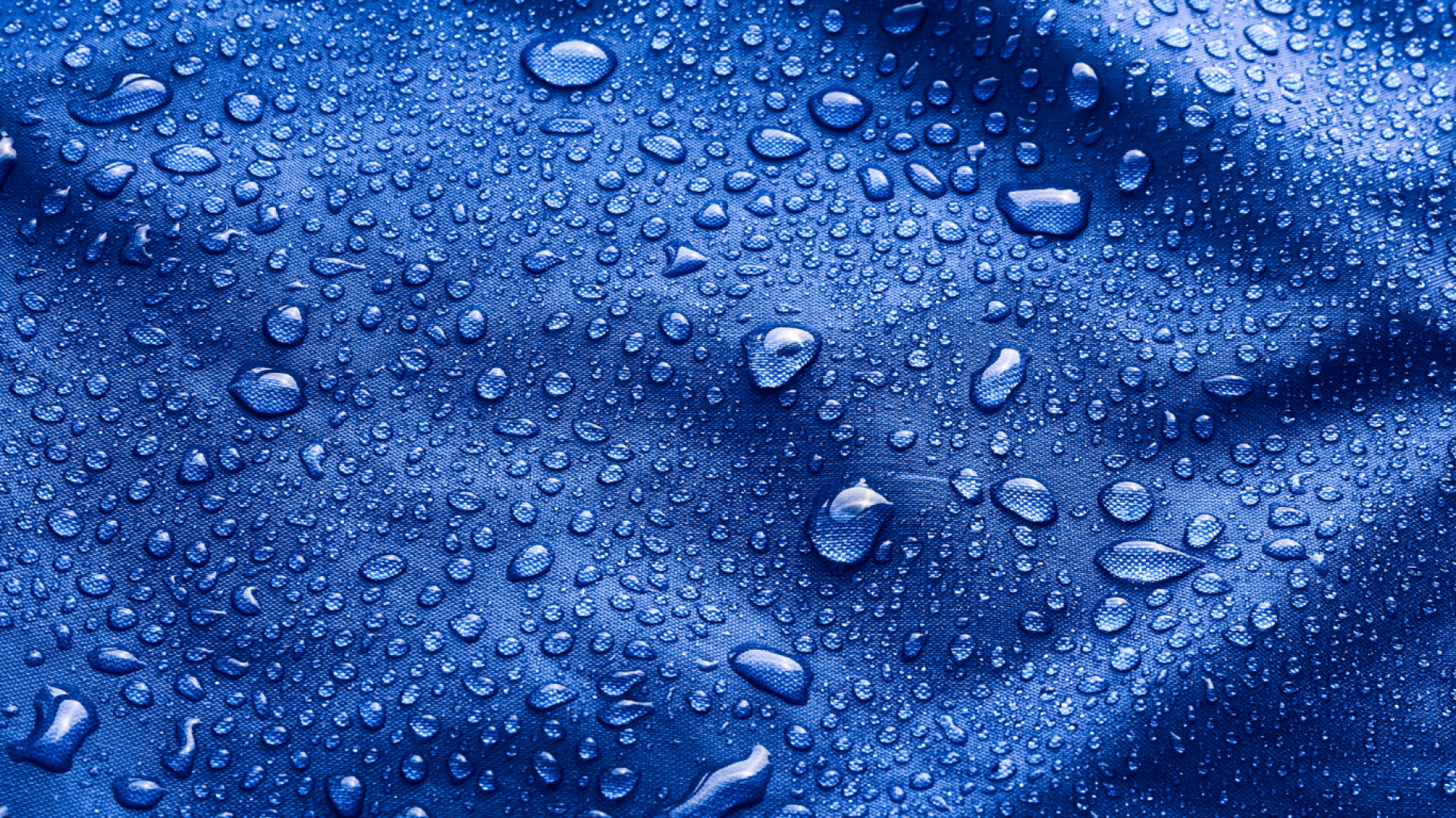
Some fabrics allow water to bead on the surface and roll off easily. Others can withstand rain to a certain extent, while some materials offer greater resistance to water penetration under pressure.
Before selecting fabric for water-related applications, it is important to understand the differences between:
Water Resistant – Water Repellent – Waterproof
It is also important to understand that water protection depends on more than just the type of fabric. Other factors include:
Fabric Structure + Density + Fiber Type + Coating + Lamination + Surface Finish + Seams + Product Design
This article explains these concepts, from the fundamentals to practical considerations that manufacturers and factories can use when selecting materials. It also provides examples of fabric types available from WLC to help illustrate which applications each material category may be suitable for.
What Is Water-Resistant Fabric?
In everyday purchasing, the term “water-resistant fabric” can refer to materials with varying levels of resistance to water, from limited protection to a much higher degree of protection.
Technically, however, not all fabrics should be grouped under the single term “waterproof.”
Different materials may be designed to:
Resist water splashes
Allow water to bead on the surface
Withstand light rain for a short period
Withstand continuous rainfall
Resist water penetration under pressure
Prevent water from passing through for an extended period
These characteristics can represent very different levels of performance.
When selecting fabric, the key question is:
What kind of water exposure does the application need to withstand?
The water protection required for a shopping bag is not necessarily the same as that required for a tent manufactured for outdoor use.
What Are the Different Levels of Water Protection?
For easier understanding, water protection can be divided into three main categories:
Water Resistant — Resists water penetration to a certain extent.
Water Repellent — Helps water bead up and roll off the surface.
Waterproof — Prevents water penetration under specified conditions.
These terms may be used differently across industries and standards. For applications with strict specifications, test results are more reliable than marketing terminology alone.
1. What Is Water Resistant?
Water resistant refers to a material that can resist wetting or water penetration to a certain extent.
In simple terms, water may not pass through the fabric immediately upon contact. However, prolonged exposure, increased water pressure, or large amounts of water may eventually cause penetration.
Examples of applications where water resistance may be sufficient include:
Light rain or drizzle
Water splashes
Everyday exposure to moisture
Bags that may come into temporary contact with water
Carry bags that are not designed for prolonged exposure to rain
For example, if a customer asks whether a fabric is waterproof but only needs a bag to withstand light rain while walking from a building to a car, a water-resistant material may be sufficient.
However, if the product must remain exposed to rain for several hours, the performance requirements will be significantly different.
2. What Is Water Repellent?
Water repellent describes a surface's ability to resist wetting.
When water droplets land on the material, they tend to remain as droplets rather than spreading and soaking into the surface immediately. This allows water to roll off more easily.
A familiar example is seeing round water droplets sitting on the surface of a fabric. This is commonly known as the beading effect.
However, it is important to understand that:
Water rolling off a surface does not mean the material is waterproof under all conditions.
A fabric may have good water repellency, but water can still penetrate its structure when exposed to sufficient pressure.
This is one of the most common misconceptions about water-protective fabrics.
Water Repellent ≠ Waterproof
Consider an umbrella. In light rain, water droplets may bead up and roll off its surface.
However, if the same fabric is used to make a bag and water is poured inside, water may pass through the material or leak through the seams.
In other words:
Water not sticking to the surface does not mean water cannot penetrate the material.
Surface water repellency and resistance to water penetration under pressure are two different properties.
3. What Is Waterproof?
In textiles, waterproof refers to a material designed to resist water penetration under specified test conditions or technical requirements.
Various technologies can be used to improve water protection, including:
- PU coating
- PVC coating
- Lamination
- Film layers
- Membranes
- Silicone coating
Other specialized coatings or material structures
However, one important point remains:
Having a coating does not mean every coated fabric offers the same level of waterproof performance.
For example, two fabrics may both be described as “PU coated,” yet differ significantly in coating quantity, fabric structure, coating process, and hydrostatic pressure performance.
If a project requires a clearly defined level of waterproof protection, check the test results for the specific material.
A Simple Guide to Water Protection Levels
For general understanding, water protection can be viewed across the following six categories. These are illustrative categories, not a standardized industry rating system.
Level 0: General Fabric Without Specific Water Protection
The fabric is not specifically designed to resist water. It may become wet, and water may pass through depending on its construction and properties.
Suitable for applications that do not require specific water-protection performance.
Level 1: Splash Resistant
Can tolerate some splashes or light moisture.
Examples include:
Small water spills
Light drizzle
Everyday humidity
This does not mean the fabric is suitable for continuous exposure to rain.
Level 2: Water Repellent
The surface helps reduce wetting, allowing water to form droplets and roll off more easily.
Suitable for applications that may come into contact with water but are not exposed to high water pressure.
Level 3: Higher Water Resistance
The material offers greater resistance to water penetration through its structure or coating.
It may be suitable for outdoor bags, outdoor equipment, or products that may be exposed to rain. Actual specifications should be checked before use.
Level 4: Waterproof
The material is designed to resist water penetration according to specified technical requirements or test results.
This often involves coated, filmed, or laminated materials.
Level 5: Waterproof for High-Pressure or Specialized Applications
These materials must meet more demanding requirements for specialized applications, such as:
- Outdoor gear
- Certain types of tents
- Protective covers
- Technical textiles
- Equipment with specific water-protection requirements
The required performance should be verified through appropriate test results, rather than relying solely on visual inspection or dropping water onto the fabric.
What Does the mm Rating Mean for Waterproof Fabric?
When researching outdoor fabrics or waterproof materials, you may come across ratings such as:
500 mm
1,000 mm
1,500 mm
3,000 mm
5,000 mm
10,000 mm
20,000 mm
These figures are commonly associated with Hydrostatic Head or Hydrostatic Pressure, which measures a fabric's ability to resist water pressure.
The basic principle is simple:
The higher the water pressure a material can withstand before water penetrates it, the higher its hydrostatic resistance rating.
However, an mm rating should not be treated as a general performance guarantee without test results for the specific material.
Waterproof Fabric Does Not Automatically Make a Waterproof Bag
This is a particularly important consideration for bag manufacturers.
Suppose you select fabric with a high waterproof rating, cut it, and sew it into a bag. Every time a needle passes through the fabric, it creates holes that may allow water to penetrate through the seams.
Therefore, “made with waterproof fabric” and “waterproof bag” are not the same thing.
To produce a genuinely waterproof product, you must consider the entire system, including:
Fabric + Seams + Zipper + Construction + Opening + Manufacturing Process
Why Does the Same Type of Fabric Have Different Levels of Water Resistance?
Even when fabrics share the same name, such as polyester, or the same specification, such as 600D, their water-resistance performance can differ.
This is because several factors influence how a fabric interacts with water.
1. Weave Density
Fabrics with a tighter construction and those with larger gaps between yarns can behave differently when exposed to water. However, weave density is not the only factor that determines water resistance.
2. Fiber Type
Polyester and nylon have different material properties. Surface finishes and the overall fabric construction must also be considered when evaluating water resistance.
3. Coating
Coating is one of the key factors that can improve a fabric's resistance to water.
Common coating types include:
- PU (Polyurethane)
- PVC (Polyvinyl Chloride)
- Silver coating
- Silicone coating
Each coating system has its own advantages and limitations.
4. Coating Thickness and Quality
Simply seeing the term “PU coated” is not enough to determine a fabric's water-resistance performance.
PU coatings can vary in:
- Thickness
- Coating quantity
- Formulation
- Number of coating layers
- Coating process
These differences can result in varying levels of water resistance, even among fabrics described as PU coated.
What Is PU Coating?
PU stands for Polyurethane. In the textile industry, it is commonly applied as a coating on the back of fabrics to modify their properties, such as reducing water penetration and changing the material's characteristics.
This is why product names such as the following are common:
- 210D PU
- 420D PU
- 600D PU
- 1680D PU
However, it is important to remember that PU is not a waterproof rating.
To determine how much water pressure a fabric can withstand, request its technical specifications or relevant test results.
What Is PVC Coating?
PVC, or Polyvinyl Chloride, is another coating system commonly used for fabrics intended for bags, tarpaulins, protective covers, and other products.
A PVC coating can help improve properties such as:
- Water resistance
- Shape retention
- Backing characteristics
- Material stiffness
The actual results depend on the product's construction and formulation.
As with PU, the term “PVC coated” should not automatically be interpreted as a specific level of waterproof performance. The actual specifications must be checked.
Which Offers Better Water Resistance: PU or PVC?
This cannot be determined from the coating name alone. A more useful question is:
“What is the hydrostatic pressure rating of this PU-coated fabric, and how does it compare with this PVC-coated fabric?”
One high-performance PU-coated fabric may perform very differently from another PU-coated fabric. The same applies to PVC.
Therefore, manufacturers should not rely on fixed assumptions such as:
PVC > PU
or
PU > PVC
Instead, compare the specifications of the individual products.
What Is Silver Coating?
Silver coating is a silver-colored layer applied to certain types of textiles.
It is commonly found in products such as:
Tents
Umbrellas
Protective covers
Outdoor equipment
Products designed to reflect some light or heat
However, the term “silver coated” does not indicate a specific waterproof rating.
If water resistance is a requirement, it must be evaluated separately.
What Is DWR?
DWR stands for Durable Water Repellent. It is a surface treatment designed to help a material resist wetting, allowing water to form droplets and roll off more easily.
DWR primarily affects how water behaves on the surface, while certain membranes and coating systems primarily help prevent water from passing through the material's structure.
For high-performance fabrics, both technologies may be used together, with DWR on the outer surface and a membrane or coating underneath.
Can Water Repellency Deteriorate Over Time?
Yes. A material's surface water repellency can change due to:
Regular use
Abrasion
Washing
Chemical exposure
Dirt and contamination
Material aging
Consequently, a product's water-repellent performance when new may differ from its performance after prolonged use.
For products that must maintain their performance after washing, additional testing conditions should be specified.
What Tests Are Used to Evaluate Water-Resistant Fabrics?
Dropping water onto a fabric is only a preliminary observation. Several standardized test methods can provide more technical information.
1. Spray Test
Evaluates the surface behavior of a material when exposed to sprayed water.
It is useful for assessing water repellency, but it does not replace a hydrostatic pressure test.
2. Hydrostatic Pressure Test
Measures a material's resistance to water penetration under pressure.
It provides a more detailed assessment of the material's resistance to water penetration.
3. Rain Test
Simulates rainfall to evaluate the performance of a material or finished product under conditions resembling actual use.
Can Results from Different Test Methods Be Compared Directly?
No, not without considering what each test measures.
Different test methods evaluate different aspects of water protection.
For example, one fabric may achieve a very good spray rating because water droplets roll off easily, yet have a relatively low hydrostatic pressure rating.
When reviewing a technical data sheet, always check which test method was used to obtain the reported result, rather than looking at the number alone.
Summary: Not All Waterproof Fabrics Offer the Same Level of Protection
“Waterproof fabric” is a widely used term in the market, but different fabrics can offer significantly different levels of water protection.
Three key terms are worth understanding:
Water Resistant: Resists water to a certain extent. Suitable for some situations involving splashes, light rain, or moisture, but does not guarantee protection under all conditions.
Water Repellent: A surface property that helps water bead up and roll off rather than wetting the fabric easily. It does not necessarily mean the material can withstand high water pressure.
Waterproof: Describes a material designed to resist water penetration under specified conditions or technical requirements. Test results are more reliable than marketing terminology alone.
A fabric's water protection also depends on several factors, including:
Fiber Type + Fabric Density + Fabric Structure + Coating + Lamination + Surface Finish
Materials described as PU coated, PVC coated, or silver coated cannot automatically be assigned a waterproof rating because coating quality, quantity, and application processes can vary from product to product.
Similarly, figures such as 210D, 420D, 600D, and 1680D do not directly measure waterproof performance.
To evaluate water resistance properly, consider the relevant test results:
Spray Test: Evaluates surface water repellency.
Hydrostatic Pressure Test: Measures resistance to water penetration under pressure.
Rain Test: Simulates exposure to rainfall.
These results should not be compared directly without accounting for the different properties each method measures.
Another important consideration for manufacturers is that waterproof fabric does not automatically make the finished product waterproof.
For example, a bag made from waterproof fabric may still allow water to enter through stitching, seams, zippers, or openings.
If a product has specific waterproof requirements, evaluate the entire system:
Fabric + Coating + Seams + Zippers + Construction + Manufacturing Process
Before purchasing fabric, do not simply ask:
“Is this fabric waterproof?”
Instead, ask:
“What level of water protection does the application require, and how will the material be used?”
A bag designed to withstand occasional rain may not need the same material as a tent or outdoor product exposed to continuous rainfall and water pressure.
The goal is not necessarily to select the material with the highest level of water protection. It is to choose the level that best matches the application, expected service life, and product budget.
For businesses and manufacturers selecting fabric
When contacting a supplier, clearly specify:
What product you intend to manufacture
Whether it will be used indoors or outdoors
How it may come into contact with water
The required level of water protection
Any test values or standards specified by your customer
Providing this information helps suppliers recommend more suitable material options than selecting based on the fabric name or the word “waterproof” alone.
