"What Is 75 GSM Spunbond Fabric Used For? How to Choose the Right Material for Bags, Tote Bags, and Premium Promotional Products"
What Is 75 GSM Spunbond Fabric?
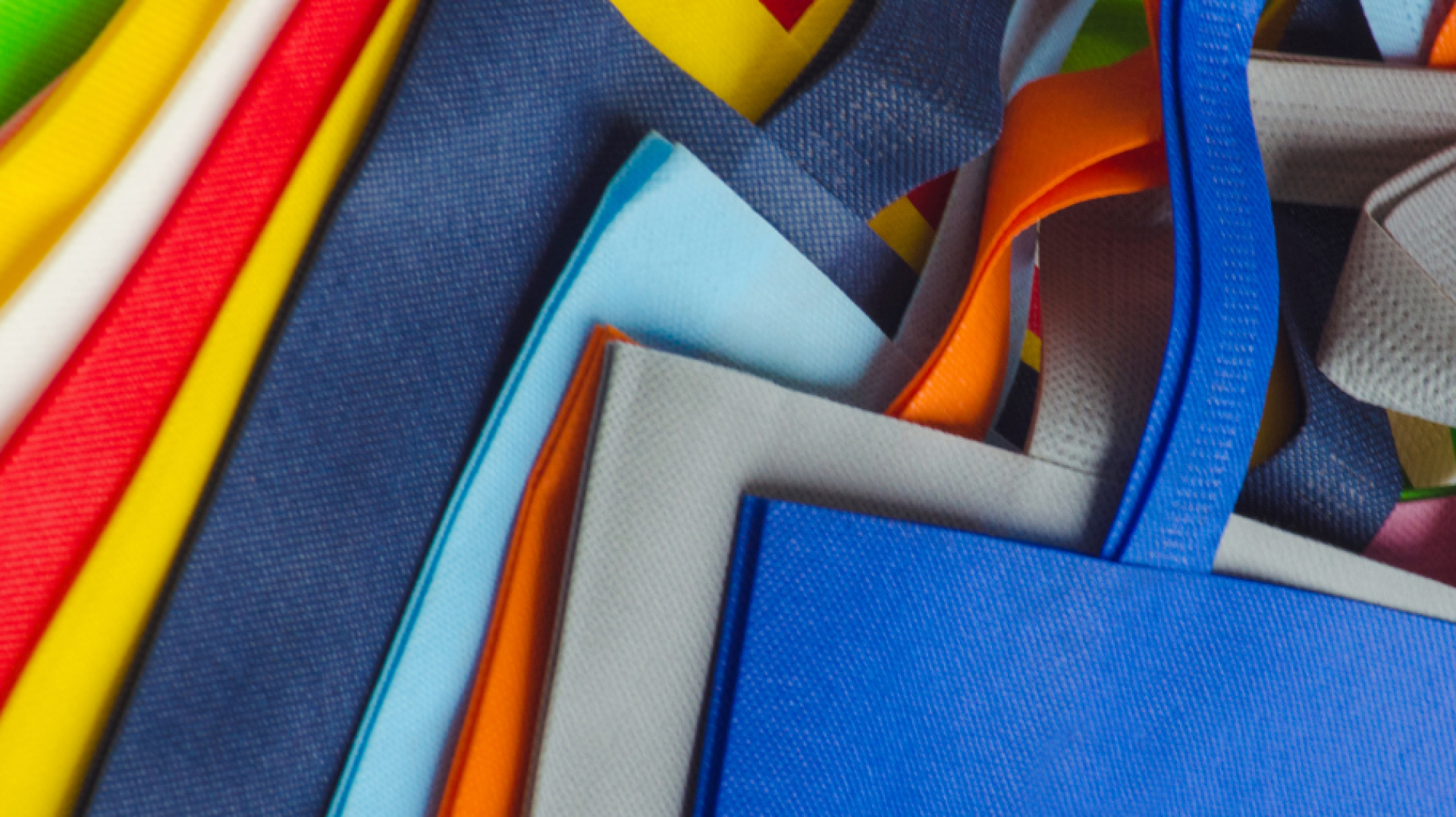
75 GSM spunbond fabric is a type of nonwoven fabric with a weight of approximately 75 grams per square meter.
GSM stands for Grams per Square Meter, a unit used to indicate the weight of a material per unit area.
Therefore:
75 GSM = One square meter of fabric weighs approximately 75 grams, according to the specified product specifications.
It is important to understand that “75 GSM” refers to the weight per unit area. It does not mean that one yard or one roll of fabric weighs 75 grams.
In the Thai market, buyers and sellers commonly refer to this material as:
75 GSM Spunbond
75 GSM Spunbond Fabric
75 GSM Nonwoven Fabric
Spunbond 75 GSM
Many commonly available spunbond fabrics are made from polypropylene (PP). However, buyers should verify the composition and product specifications with their supplier before purchasing.
What Applications Is 75 GSM Spunbond Fabric Suitable For?
75 GSM spunbond fabric can be considered for a variety of applications, including:
- Shopping bags
- Product bags
- Event bags
- Seminar bags
- Premium promotional bags
- Giveaway bags
- Bags for promotional campaigns
- Product packaging bags
- Product covers
- Certain types of packaging
- Nonwoven fabric processing
- Certain decorative applications
- Certain industrial applications
A key feature of 75 GSM spunbond is that it contains more material per unit area than lower-GSM options, such as 25, 30, 40, or 50 GSM. This makes it worth considering for applications that require more material substance. However, 75 GSM is not necessarily suitable for every application.
For products that must support heavy loads, withstand long-term outdoor use, provide true waterproof performance, or meet high durability requirements, alternative material types may also need to be considered.
Why Is 75 GSM Spunbond Worth Considering for Bags and Packaging?
The main reason is not simply the number 75, but its position between relatively lightweight spunbond options and higher-GSM materials.
This allows manufacturers to evaluate it when seeking a balance between several factors, including:
Material weight + texture + shape retention + product design + cost
For example, when manufacturing giveaway bags for distributing documents at seminars, choosing a material that is thicker than necessary may increase material costs.
Conversely, selecting a material that is too lightweight may prevent the finished product from achieving the desired appearance or performance.
Therefore, 75 GSM is one of the specifications worth comparing with 60, 90, or 100 GSM before making a purchasing decision.
75 GSM Spunbond Fabric for Bag Manufacturing
One of the key applications of spunbond fabric is bag manufacturing.
Here are several types of bags for which 75 GSM spunbond can be evaluated and tested.
1. Shopping Bags
Suitable for businesses looking to produce bags for carrying products or as an alternative to certain types of packaging. Various designs are possible, including:
- Tote bags
- Handled shopping bags
- Box-shaped bags
- Bags with expandable bottoms
- Bags with expandable side gussets
The suitability of 75 GSM depends on the bag's dimensions and the weight of the items it will carry.
2. Event Bags
Event bags are another application where spunbond fabric can be used in various ways, including for:
- Seminars
- Conferences
- Trade shows
- Exhibitions
- Product launches
- Roadshows
- Public relations events
- Corporate activities
These bags can hold documents, brochures, catalogs, souvenirs, or product samples.
For large-volume production, selecting the appropriate GSM is important for both the product's appearance and the project's material costs.
3. Premium Promotional Bags
Companies specializing in corporate gifts and premium promotional products can consider 75 GSM spunbond for certain applications, such as:
- Promotional giveaway bags
- Gift set bags
- Product bags
- Brand promotional bags
- Campaign bags
- Dealer bags
- Corporate client gift bags
One advantage is the ability to select fabric colors that match a brand's corporate identity, provided the required colors are available.
The material can then be evaluated for logo or text printing using a suitable printing method.
4. Product Bags
Retailers and manufacturers can use spunbond fabric to produce bags for carrying or packaging products.
For example:
Retail store → Product placed in bag → Customer carries it home
Or:
Factory → Product packaged → Delivered to dealer, distributor, or customer
In these cases, at least four factors should be considered:
- Product dimensions
- Product weight
- Product shape
- Required bag service life
A bag designed to carry a single garment will have different structural requirements from one intended to carry heavier products.
5. Gift and Gift Set Bags
Spunbond can be used as part of the packaging for various gift sets, including:
- Gift sets
- Welcome kits
- Seminar kits
- Corporate gifts
- Membership product sets
- Product trial kits
- Promotional kits
- Seasonal gift sets
Choosing colors that align with a brand's identity can help the bag contribute to the overall product presentation.
6. Seminar Bags
Seminars and corporate meetings often require bags for carrying items such as:
- Documents
- Notebooks
- Pens
- Brochures
- Catalogs
- Souvenirs
- Product samples
Spunbond is one material worth considering for this type of bag, particularly when large production quantities are required.
However, if the bag will contain heavy items, a prototype should be produced and load-tested before full production.
7. Exhibition and Trade Show Bags
Trade shows are environments where brands distribute large quantities of documents and products. Bags therefore serve not only as containers but also as a means of brand communication.
Imagine attendees carrying bags featuring:
Brand colors + Logo + Message
throughout the exhibition venue.
The bag can become a mobile marketing medium within the event.
For event organizers and exhibitors requiring large production volumes, spunbond is one material worth considering.
8. Retail Shopping Bags
Retail businesses can consider spunbond for product packaging bags, including those used by:
- Clothing stores
- Fashion retailers
- Gift shops
- Cosmetics stores
- Lifestyle stores
- Souvenir shops
- Corporate merchandise stores
However, the bag's dimensions and structure must be appropriate for the weight of the products it will carry.
9. Packaging Applications
Beyond bags, spunbond can be used as a component material in certain packaging applications, including:
- Product covers
- Wrapping bags
- Product pouches
- Inner bags
- Certain types of protective bags
- Product set packaging
Suitability depends on the level of protection required by the product.
If the application requires a specified level of protection against water, moisture, impact, or dust, additional technical specifications should be checked.
10. Nonwoven Processing Applications
Factories equipped with nonwoven processing machinery can convert spunbond materials into various products.
However, it is important to verify that the material is compatible with the factory's machinery and manufacturing processes.
For applications involving cutting, sewing, bonding, folding, printing, or forming, testing the actual material before mass production is recommended.
Is 75 GSM Spunbond Fabric Strong?
Strength cannot be determined by GSM alone.
The strength of the finished product also depends on several factors, including:
- Raw material composition
- Manufacturing quality
- Material uniformity
- Direction of applied force
- Product dimensions
- Product design
- Sewing method
- Bonding method
- Handle design
- Load-bearing points
- Weight of the contents
For bag manufacturers, evaluating these factors and testing a prototype under actual usage conditions is more reliable than choosing a material based on GSM alone.
How to Choose 75 GSM Spunbond Fabric for Bag Manufacturing
If you are a bag manufacturer, a premium gift company, or a brand owner, you should not select materials based on GSM alone.
Start by asking these seven questions.
1. What Will the Bag Carry?
This is the most important question to ask first.
A bag designed to carry brochures has different requirements from one intended to carry products weighing several kilograms.
2. How Much Will the Contents Weigh?
Estimate the maximum load the bag will need to carry, then create a prototype and test it.
Do not rely on GSM alone to predict the material's load-bearing capacity.
3. What Are the Bag Dimensions?
A larger bag cannot necessarily perform the same way simply by using more fabric.
Dimensions affect several factors, including:
- Load-bearing points
- Handle length and positioning
- Weight distribution
- Shape
- Shape retention
These factors should be evaluated together.
4. What Type of Handles Will Be Used?
Handles are critical structural points in a bag.
Even if the main material remains intact, the bag may fail at the handle attachment points if they cannot withstand the applied force.
5. Will the Bag Be Sewn or Bonded?
The assembly method affects the strength of the finished product.
Manufacturers should test the material using their own machinery and production processes.
6. Will the Bag Feature a Printed Logo?
If printing is required, it should be considered during material selection because different printing methods have different limitations.
Inform the printing supplier of the following:
- Material composition
- Fabric color
- Number of printing colors
- Design dimensions
- Production quantity
Always conduct a print test before proceeding with full production.
7. How Long Must the Bag Last?
A giveaway bag intended for a one-day event has different requirements from a reusable bag that a brand expects customers to use over an extended period.
If high durability is required, consider comparing spunbond with other material types.
Can 75 GSM Spunbond Fabric Be Printed with a Logo?
In general, spunbond can be used with certain printing systems. However, the more important question is not simply:
“Can it be printed?”
Instead, ask:
“Is this specific material compatible with the printing system used by my factory?”
The results depend on several factors, including:
- Raw material composition
- Base fabric color
- Ink type
- Printing equipment
- Temperature
- Design
- Number of colors
- Print resolution
- Post-printing processes
For large-volume production, always conduct a print test before proceeding with the full order.
Does Spunbond Fabric Color Affect Printing Results?
Yes, particularly when printing light colors onto dark materials.
For example, printing a white logo on black fabric may require different techniques and ink handling compared with printing a black logo on white fabric.
If your brand guidelines require precise color matching, produce and approve an actual printed sample before authorizing full production.
Is 75 GSM Spunbond Fabric Waterproof?
You should not assume that all types of 75 GSM spunbond fabric are waterproof.
PP has different material properties from natural fibers, but spunbond fabric has a structure that may contain gaps between the fibers.
Therefore, the fact that a material is made of PP does not automatically mean the fabric is 100% waterproof.
If your application requires true waterproof performance, choose a material supported by relevant test results or technical specifications.
Can 75 GSM Spunbond Fabric Be Used Outdoors?
It can be used for certain short-term outdoor activities, depending on its specifications.
However, for long-term outdoor use, such as:
Daily exposure to sunlight
Exposure to rain
Continuous outdoor storage
Use over several months or years
You should check its UV resistance, UV stabilization, and other relevant performance properties.
Do not assume that 75 GSM spunbond fabric is UV-resistant based on its GSM rating alone.
GSM and UV resistance are two different properties.
Which Applications Require More Than Just GSM When Choosing 75 GSM Spunbond Fabric?
Although 75 GSM spunbond fabric can be used for a wide range of applications, some uses require careful evaluation of additional material properties.
For example:
Applications Requiring High Load-Bearing Capacity
Tensile strength, tear strength, seam strength, or the finished product must be tested against the specific requirements.
Waterproof Applications
Verify that the material meets the required waterproof performance standards.
Long-Term Outdoor Applications
Check its UV resistance and suitability for prolonged exposure to outdoor conditions.
Medical Applications
The material must meet the requirements and standards applicable to the specific medical product. General-purpose spunbond fabric should not be used as a substitute for medical-grade materials.
Food-Contact Applications
Verify whether the material meets the relevant food-contact requirements.
Safety-Critical Applications
Check the specific standards and performance requirements applicable to the product.
Which Businesses Can Benefit from 75 GSM Spunbond Fabric?
Several types of businesses can consider 75 GSM spunbond fabric for their applications.
Bag Manufacturers
Can use it to develop samples for customers looking for nonwoven bags.
Promotional Gift Companies
Suitable as a material option for marketing campaigns and corporate gifts.
Event Organizers
Can consider it for seminar bags, exhibition bags, and event merchandise.
Packaging Companies
Can evaluate it for certain types of bags and packaging applications.
Printing Companies
Can test it with printing systems compatible with nonwoven materials.
Retail Businesses
Can consider it for shopping bags and product carry bags.
Brand Owners
Can develop custom bags that support their branding strategy.
OEM Manufacturers
Can add spunbond fabric to their material options to offer customers more choices.
How Is 75 GSM Spunbond Fabric Suitable for Promotional Premiums?
In this context, “premium” refers to promotional merchandise or marketing giveaways.
For example, an electrical appliance brand organizes a roadshow and plans to distribute catalogs and product samples to 3,000 attendees.
The brand can produce spunbond bags featuring:
Brand colors
Logo
Campaign message
These bags can be used to hold promotional items.
In this case, the bag serves three purposes at once:
Holds products and promotional materials
Provides convenience for customers
Acts as a branding medium
This is one reason spunbond fabric is used for promotional merchandise and event-related products.
Is 75 GSM Spunbond Fabric Suitable for Orders of 1,000–10,000 Bags?
Production quantity does not directly determine the required GSM.
Whether the order is for:
500 bags
1,000 bags
5,000 bags
10,000 bags
50,000 bags
The material selection process remains the same:
Application → Requirements → Material → Prototype → Testing → Cost → Production
What changes with order quantity are factors such as production costs, machinery efficiency, material waste, and purchasing requirements.
Therefore, do not choose 75 GSM simply because the order quantity is large.
Choose it because it meets the product specifications.
How to Test 75 GSM Spunbond Fabric Before Placing a Bulk Order
For B2B customers, especially manufacturers, the following steps are recommended before committing to a large order.
1. Request a Sample
Examine the actual material's color, texture, and fabric characteristics.
2. Test on Production Machinery
Check its compatibility with cutting, sewing, bonding, or forming processes.
3. Create a Prototype
Produce a sample that closely represents the finished product.
4. Conduct Functional Tests
Test the prototype using the actual items it is intended to carry or contain.
5. Perform a Printing Test
If a logo or design is required, test the printing process before proceeding with bulk production.
6. Calculate Costs
Calculate the material cost per unit and the overall production cost.
7. Approve the Sample
Confirm the approved sample and retain it as a reference for production.
8. Proceed with Bulk Production
Once the sample has been approved and the required tests have been completed, proceed with the bulk order.
Following this process helps reduce the risk of selecting a material that is unsuitable for the finished product.
5 Common Mistakes When Choosing Spunbond Fabric
1. Assuming Higher GSM Always Means Better Quality
This is not necessarily true. The most suitable GSM is the one that meets the product requirements at an appropriate cost.
2. Using GSM as the Sole Measure of Strength
GSM alone cannot determine a material's overall strength, as several other factors also affect its performance.
3. Skipping the Sampling Stage
Examining the material on its own can produce different results from testing it as part of a finished product.
4. Failing to Test the Printing Process
The actual printed colors on the material may differ from the digital mockup displayed on a screen.
5. Choosing Materials Based on Price Alone
A lower-priced material that fails to meet product requirements may lead to additional costs from material waste, production defects, or rework.
Checklist Before Buying 75 GSM Spunbond Fabric
Before contacting a supplier, prepare the following information:
Application: What will the fabric be used for?
GSM: Do you specifically require 75 GSM, or would you like to compare different options?
Color: Which color do you need?
Width: What fabric width do you require?
Quantity: How much material do you need?
Printing: Will the fabric need to be printed?
Process: Will it be sewn, bonded, cut, or formed?
Load: Approximately how much weight must the finished product carry?
Environment: Will the product be used indoors or outdoors?
Special Requirements: Are any specific material properties required?
Providing these details will help your supplier recommend more suitable material options.
Summary: Who Is 75 GSM Spunbond Fabric Suitable For?
75 GSM spunbond fabric is one option worth considering for businesses looking for nonwoven materials to manufacture:
- Bags and shopping bags
- Event bags and seminar bags
- Promotional bags and premium gift bags
- Product carry bags
- Packaging
- Certain converted products
The key characteristic of 75 GSM is its higher material weight per unit area compared with lower-GSM options. It can be evaluated through product trials to find a suitable balance between the desired product characteristics and cost.
However, no single GSM is ideal for every application.
Before making a decision, ask yourself:
“What will our product be used for?”
Then evaluate the following factors:
Application → Dimensions → Load → Structure → Manufacturing Process → Printing → Service Life → Cost
Only then should you select the appropriate GSM.
For factories, bag manufacturers, promotional gift companies, brand owners, and businesses unsure whether to choose 60, 75, 90, or 100 GSM spunbond fabric, requesting samples in several specifications and testing them with the actual product before placing a bulk order is a practical way to make a more informed decision.
Need Help Choosing the Right Spunbond Fabric?
If you are looking for spunbond fabric for bags, shopping bags, event merchandise, promotional gifts, packaging, or other converted products, contact the World Leather Center (WLC) team with your intended application, product dimensions, preferred color, and required quantity.
Our team can help you identify initial material specifications to evaluate before production.
Not sure which GSM to choose?
Simply tell us what you plan to make with spunbond fabric and share your application requirements. Our sales team can help narrow down suitable options for testing before full-scale production.